The bird-flight omen
Consider ornithomancy through Forsyth’s brief definition, with attention to what a real observation can and cannot establish.
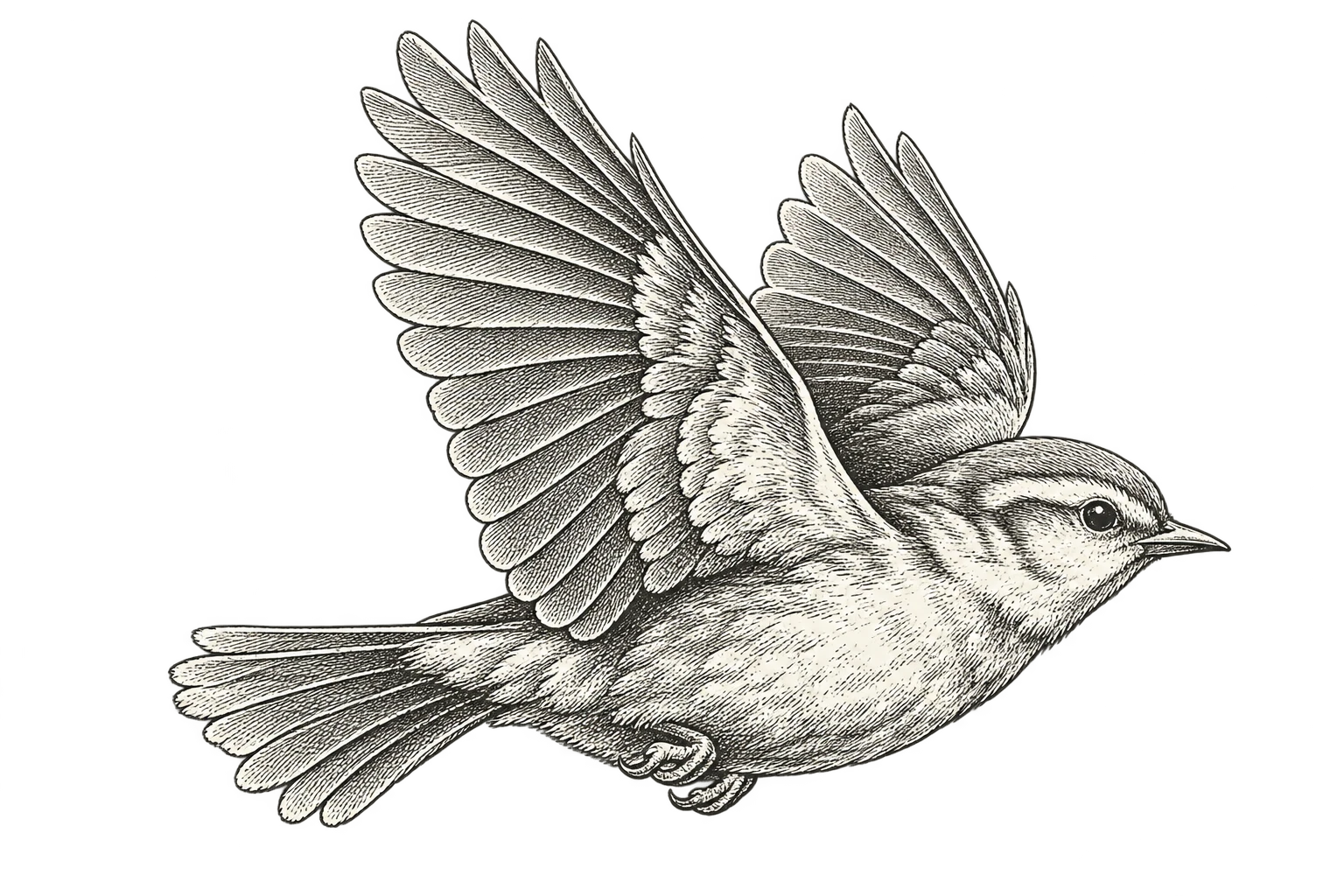
A bird crossing your view can become memorable because of the question you were already carrying. Before deciding what the crossing meant, it helps to remember what the bird actually did.
Forsyth defines ornithomancy as divination through birds and compares the term with augury. The passage is short. It gives no complete table connecting a particular species, direction, or number of calls with a particular answer.
The bird before the omen
A good field note can begin with time, place, movement, and whether you could identify the bird at all. “A dark bird flew left across the street” is more accurate than “a raven warned me” when the species was uncertain.
You can then record the personal association separately. The surprise of seeing the bird may matter to your reading even when you cannot name it. Its behaviour is still its own, not an obligation to deliver a message.
No universal direction key
We have not attached a right-means-yes or left-means-no table to Forsyth’s definition. Such a rule would need an identified method and source. Different accounts should not be blended because the resulting key is easy to remember.
This is a historical introduction rather than an augury manual. You can observe birds quietly without disturbing nests, attracting them with a supposed offering, or making their ordinary movements responsible for an important decision. Begin with the watching; let the interpretation show its own limits.
Source and reading notes
The named art is documented here, but a detailed species or direction system is not. The field-note distinctions are editorial guidance, not inherited rules.
J. S. Forsyth, Demonologia (1827). Ornithomancy, p. 155.