Samhain three-card divination
Use a three-card Samhain spread to examine what has ended, what remains present and what deserves your attention in the season ahead.
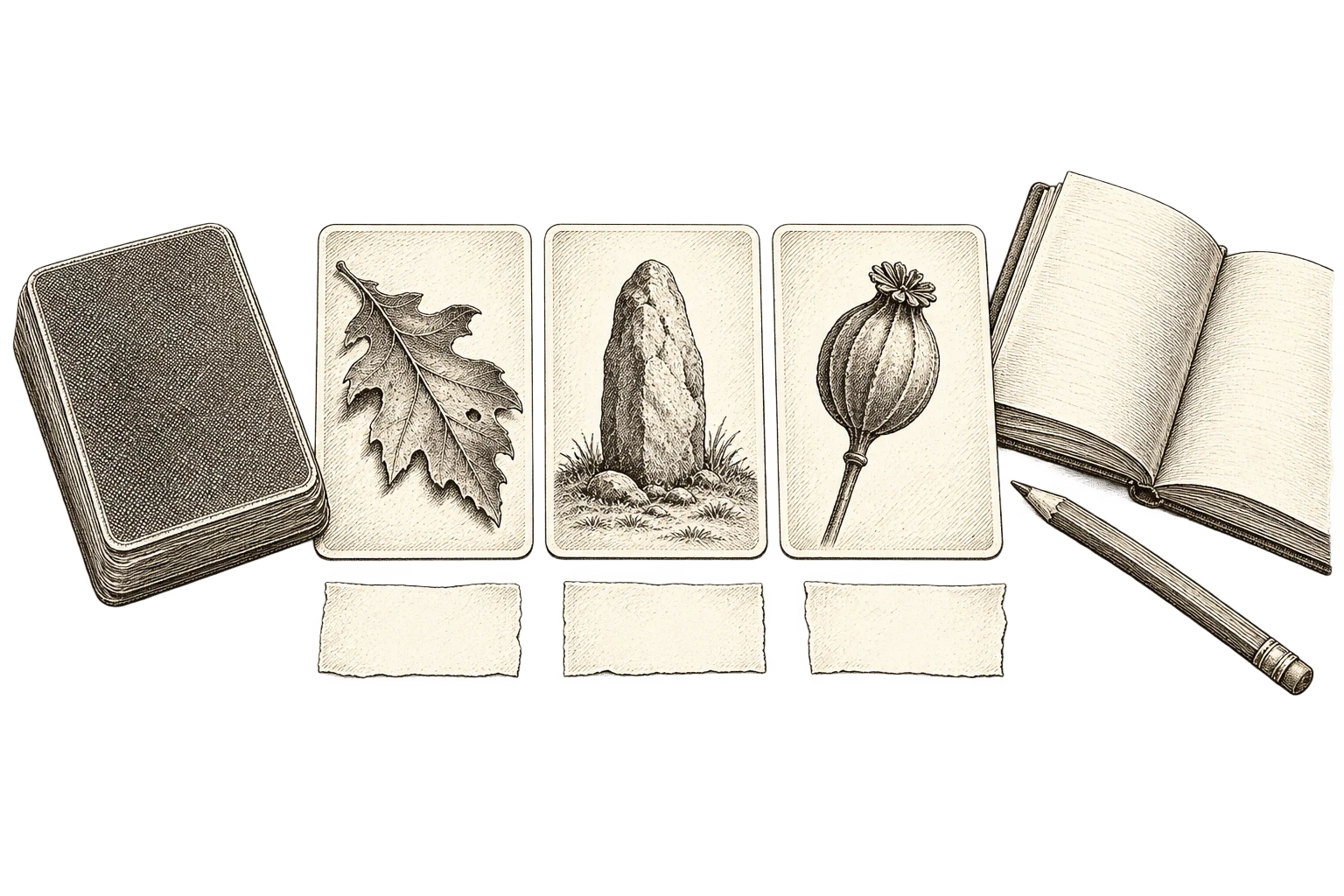
This Samhain three-card spread looks backward, at the present, and toward the season ahead. It does not promise messages from the dead or a fixed prediction. The cards provide images and associations you can compare with what you already know.
When to work it
Read on October 31, during the first days of November or at another personal year-end. Choose a time when you can write without interruption. Midnight, darkness and a view of the moon are unnecessary.
This is an original contemporary Okkult layout for seasonal reflection. It is not presented as an ancient Samhain divination method. Use the practices of your own deck or tradition when they differ.
For the calendar behind the occasion, read Samhain, saints and souls. It separates this seasonal setting from All Saints’ Day and All Souls’ Day.
What you’ll need
- A tarot, oracle or ordinary playing-card deck
- Three small pieces of paper
- A notebook and pencil
If you use playing cards, begin with your own established meanings or respond to number, color and suit. Do not buy a new deck for this exercise. You can also select three images from a magazine or postcard collection when cards are not part of your practice.
Lay out the turning year
- Write “What has ended,” “What remains,” and “What asks for attention” on three slips. Set them from left to right.
- Choose one open question about your own choices. “What should I notice as I change my work routine?” is usable; “Exactly what will another person do?” assigns the cards knowledge they cannot verify. Record your question and any facts already known.
- Shuffle in your usual way. Draw one card for each position and write down all three before interpreting them. If a card falls reversed, note it only if reversals already belong to your method.
- Study the first card. Record one detail you can point to, then one association and one possible connection to what has ended. Repeat for what remains and what asks for attention. Keeping observation separate from interpretation makes the reading easier to review.
- Read the notes from left to right. Complete “The pattern I notice is…” Then write one action, conversation or factual question that belongs to you and can be addressed within a week.
- Return the cards to the deck and stack the slips. Say: “The reading is recorded; the question returns to my judgment.” Put the record away until November 7 rather than redrawing the spread until it agrees with a preferred answer.
Questions to keep outside the cards
Do not use the spread to diagnose illness, determine whether someone is dangerous, replace legal or financial advice, or decide whether another person secretly consents. Seek reliable information and qualified help for decisions with serious consequences.
If the reading produces fear, list what the card literally shows, what you inferred and what evidence exists outside the deck. You may close the session without completing an interpretation.
Review the reading
After one week, compare the notes with what actually occurred. Mark which associations helped you name a concern and which did not fit. The record is more useful than claiming every image was accurate after the fact.
If the first position named something you are ready to close, continue with the Samhain release spell. Keep the two practices separate so the cards do not become proof that you must act.
Practice notes
Okkult wrote the three positions, observation method and closing words for this contemporary spread. No historical Samhain origin or supernatural certainty is claimed. The cards are prompts for attention; the final question returns to your own judgment.
Explore the practice
Explore divination rituals for more context and related workings. For help choosing materials and recording your experience, read witchcraft for beginners.