The last-sheaf figure
Bind a small grain figure for harvest thanksgiving, with a source note distinguishing this household working from recorded last-sheaf customs.
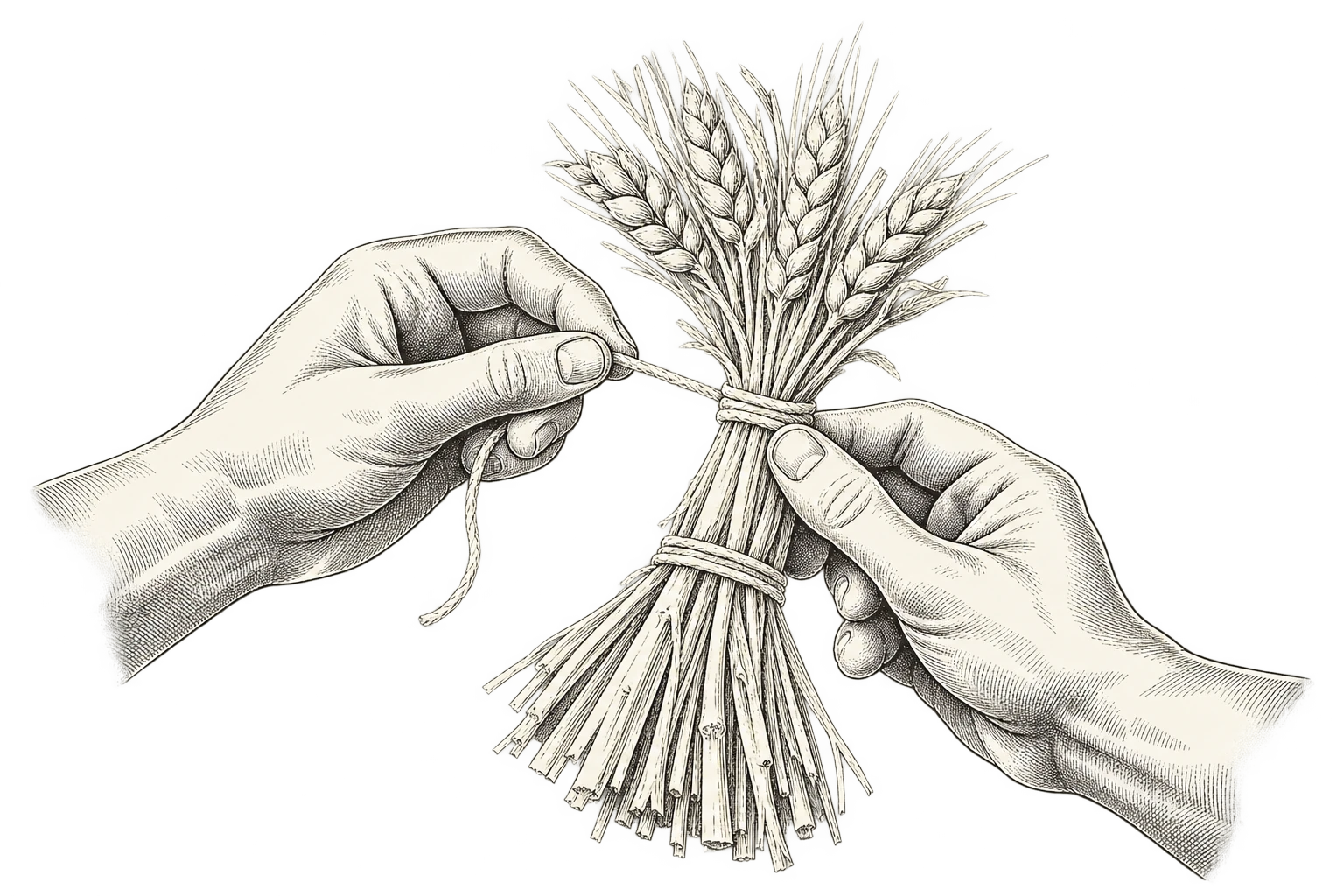
A handful of stalks is enough to make a small harvest figure. Lay them together, bind a neck, and the bundle begins to suggest a head and a body. It need not have a face. The grain and the work of your hands give it plenty of character.
Make this figure when you want to mark the harvest season and give thanks for what has fed the household. If you have grown something yourself, let that season shape the occasion. If you buy your grain, name that honestly too.
The harvest behind the figure
Frazer records human-shaped last sheaves in several places. One Upper Brittany account describes a Mother-sheaf containing a smaller figure. That particular form belongs to its reported setting. The small figure below is a new household working, not a claim to reproduce the Breton custom.
Bought stalks are not the last sheaf of a field. You can still make an offering of thanks with them without borrowing a history they do not have.
What to gather
- A small bundle of clean, dry cereal stalks from a known source
- Cotton thread
- Scissors
- A shallow dish or a place on your seasonal shelf
Keep the dried stalks away from candles and other flames.
Bind the figure
Lay the stalks with their heads together. Trim the loose ends until the bundle is small enough to rest in your hand. Save the offcuts for the dish rather than scattering them as you work.
Tie thread below the grain heads to make a neck. Lower down, bind a waist. You can leave it as a simple standing bundle or separate a few stalks at the sides and bind them loosely into arms. Stop if the stems begin to split; the figure does not need to be tightly cinched.
Hold it and name something that has sustained you this season. Be as particular as you can: food from a garden, meals someone brought, wages that bought the groceries. Include the work behind it if you know whose work it was.
You might say, “For what has fed this house, I give thanks.” These are new words for this working, not a traditional harvest formula.
Set the figure in its dish. Leave it on your seasonal shelf for as long as you intend to tend it. Before moving on to another season, check that it is dry and clean. If it has become damp or mouldy, retire it promptly.
Closing the season
Untie the thread when you are ready to take the figure down. Reuse the cotton if it is sound. Dispose of the stalks according to their condition and the materials they contain; an offering does not need to be left in a field or stream to be complete.
Source
James George Frazer, The Golden Bough, chapter XLV, “The Corn-Mother and the Corn-Maiden in Northern Europe.” The binding instructions, thanksgiving words, display, and closing above are contemporary additions.
Explore the practice
Explore money spells and prosperity rituals for more context and related workings. For help choosing materials and recording your experience, read witchcraft for beginners.