The Lenten card draw
Make a thirty-six-card bag of lots with letters, numbers, and blanks, using clearly labelled contemporary reading prompts.
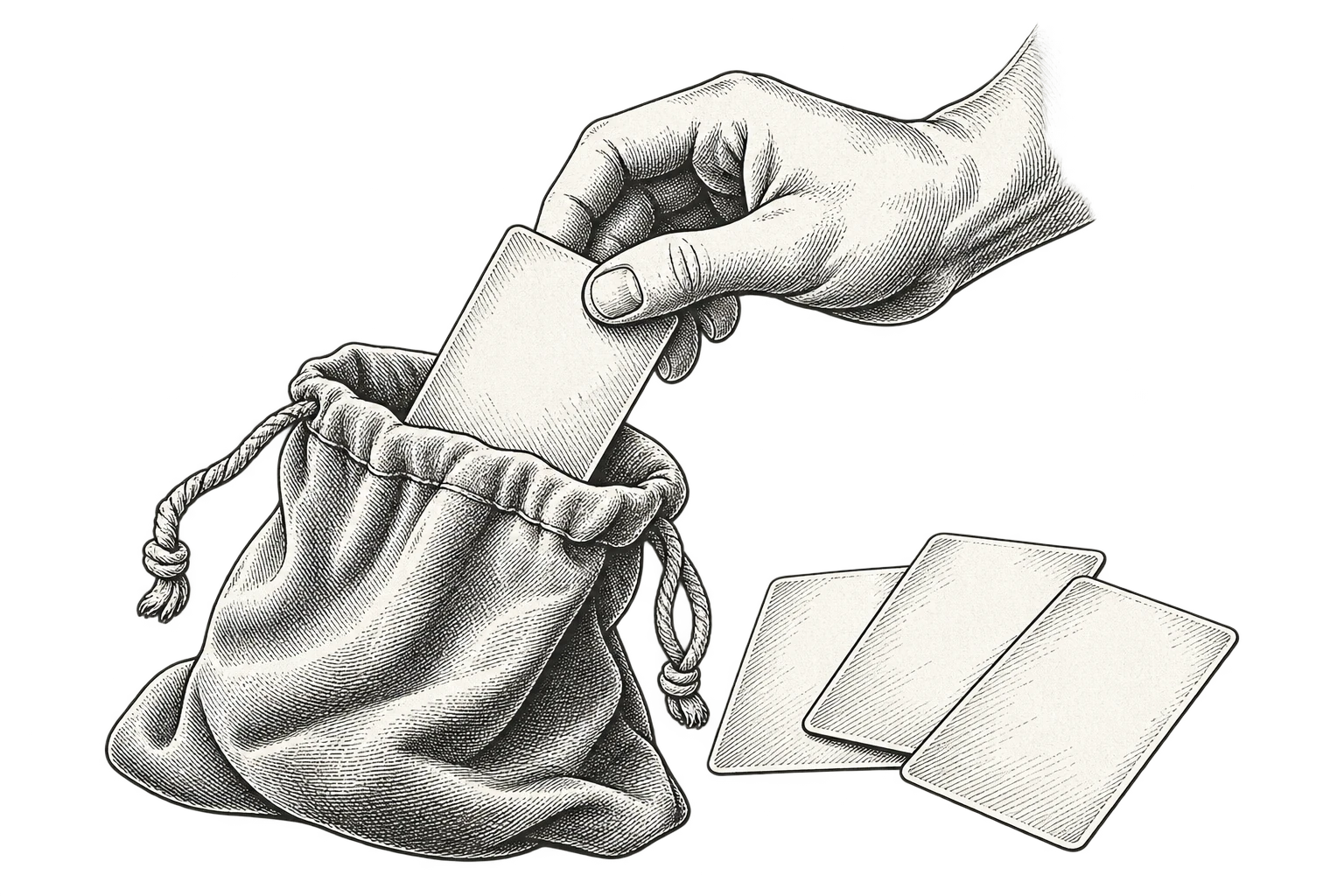
This is a bag of lots you can make at the kitchen table. Thirty-six small cards are enough: twelve letters, twelve numbers, and twelve left blank. Use the same paper for all of them so your fingers cannot pick out a particular kind before it comes out of the bag.
The arrangement comes from a printed Lenten charm. The reading prompts below are new. They let you work with its three kinds of card without treating marriage as the only future worth asking about.
What to gather
- Thirty-six equal pieces of opaque card
- A pen
- A cloth bag large enough to mix them freely
- A notebook
Write A to L on twelve cards and 1 to 12 on twelve more. Leave the others completely blank. These particular letters and numbers are our choice; the source gives the quantities without specifying which twelve letters to use.
Make the draw
Choose a question about a relationship, an invitation, or a matter you are waiting to understand. Write it before putting your hand into the bag.
Mix the cards thoroughly. Draw once, place the card face up, and give it a moment before reaching for a meaning.
Use the following as prompts for this adaptation:
- A letter: Write the first word beginning with that letter that comes to you. Ask how that word belongs to the question. It need not be someone’s initial.
- A number: Write what the number brings to mind before looking elsewhere for correspondences. It may suggest an amount, an interval, or nothing useful at all. Do not turn it automatically into a date or deadline.
- A blank: Leave space beneath the question. Ask what remains unspoken or what you are not yet ready to name. A blank is not a refusal or an unlucky draw in this version.
Copy the card and your response into the notebook. If friends are drawing with you, let each person offer their own interpretation before anyone else weighs in. Replace all cards in the bag when you finish.
Why the name is Lenten
Noe’s 1885 handbook places this charm on Fridays in Lent, except Good Friday, and assigns marriage-related outcomes to its three card types. That calendar belongs to the printed account. You can retain it when exploring the seasonal setting, but the contemporary exercise above can be done on another evening.
Its prompts are deliberately different from the original meanings. Keep both clearly labelled in your notes if you are comparing them.
Source
A. H. Noe, The Witches’ Dream Book; and Fortune Teller, “Lent charm,” printed page 89.
Explore the practice
Explore divination rituals for more context and related workings. For help choosing materials and recording your experience, read witchcraft for beginners.