The nine-pea doorway omen
Explore a printed marriage omen with a nine-pea pod and a brief, clearly bounded doorway observation.
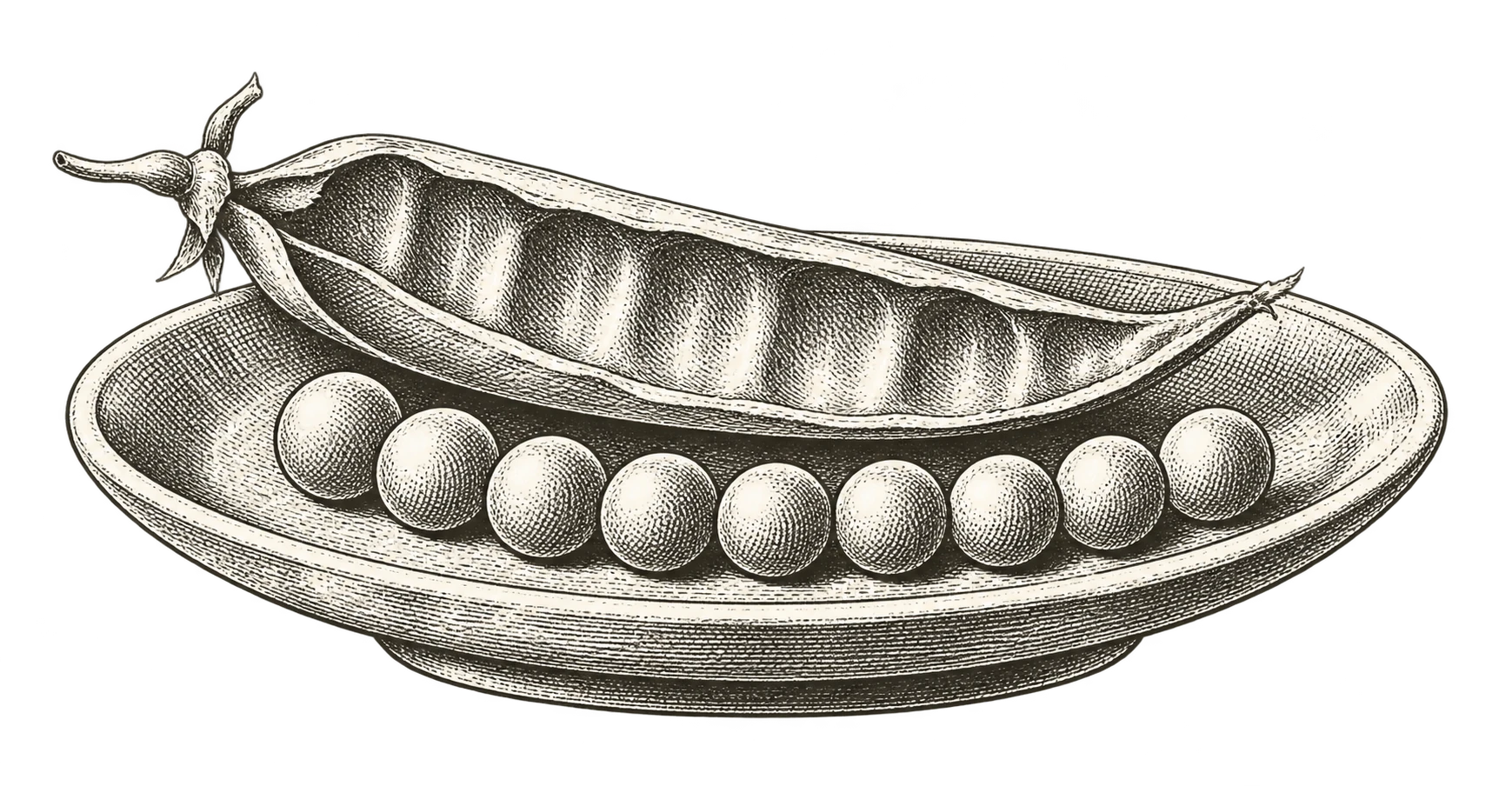
Finding nine peas is the first part of this little omen. Open a pod over a plate and count what is actually there. If it holds eight or ten, use the peas for their ordinary purpose and look another day. The search need not become an ordeal.
The charm in Noe’s handbook hangs a nine-pea pod above an entrance and interprets the first passerby in terms of marriage. Its assumptions about gender and marital status belong to the printed period. The version here keeps the counted pod and a single observation, without borrowing that verdict.
Try the observation
- Count the peas in a fresh pod and set the pod and peas in a small dish. Use a place beside your own inner doorway where it will not spill.
- Choose a short observation period when your household is comfortable taking part. Write the question you are considering about welcome, companionship, or meeting people.
- Notice the first ordinary arrival during that period. Record the event in plain words, without guessing anyone’s private relationship status.
- Remove the dish when the period ends, whether or not anyone arrived. Dispose of the plant material appropriately rather than leaving it at the doorway.
What belongs to the omen
Ask what the arrival brought to mind about your question. If nobody came, that is an uneventful observation, not a sentence of loneliness.
The dish and the reflective reading are substantial changes. If your interest is historical, compare them with the book’s suspended pod and fixed marriage meanings. Calling the exercise an adaptation keeps those differences visible.
Source and reading notes
The nine-pea count and doorway motif come from the printed charm. Placement, observation period, and interpretation above are contemporary.
A. H. Noe, The Witches’ Dream Book; and Fortune Teller (1885). “For a girl to ascertain if she will soon marry,” p. 88.
Explore the practice
Explore divination rituals for more context and related workings. For help choosing materials and recording your experience, read witchcraft for beginners.