The overheard-word omen
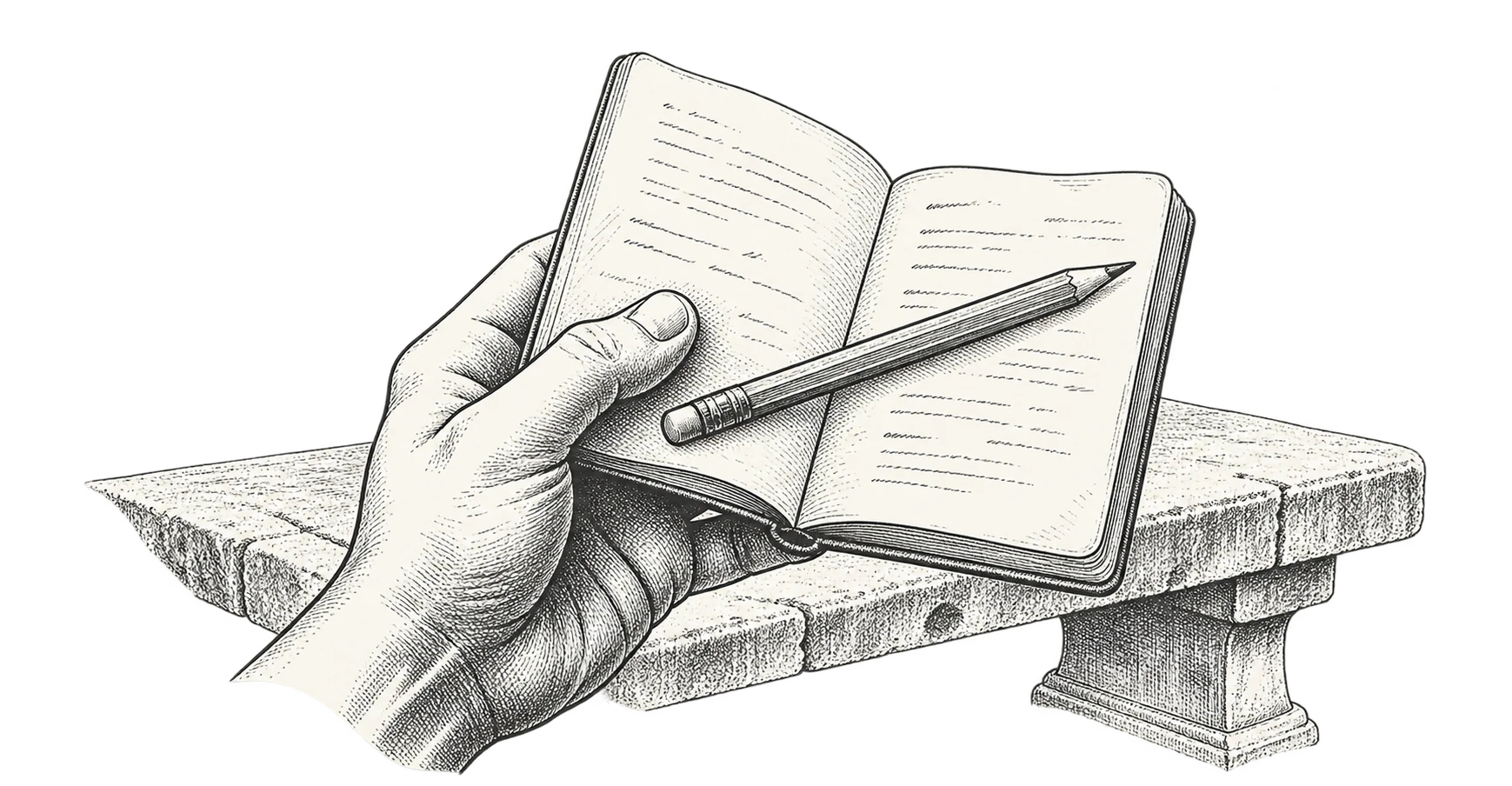
Keep a brief record of a chance-heard phrase in a contemporary practice inspired by cledonism.
An ordinary phrase can catch your attention at an unusual moment. In cledonism, chance words are treated as omens. The attraction is easy to understand: a sentence from elsewhere seems suddenly to answer the one you were carrying.
Give the working a boundary before you begin. Otherwise an entire afternoon can become a hunt for the phrase you want to hear.
Listen once
- Write an open question and choose a brief, ordinary setting where conversation is meant to be public. Do not listen at a private door or record strangers.
- Set a limit of a few minutes. Take the first clearly heard, non-private phrase that catches your attention, rather than waiting for a pleasing answer.
- Write only the few words needed for your own record, without names or identifying details. If nothing is clearly heard, record no result.
- Later, place the phrase beside your question and write the connection you see. Add another possible interpretation before closing the notebook.
What you brought to the words
Note the setting too. A station will offer language about departures; a shop will offer prices and choices. A phrase can sound uncannily relevant because you entered the scene with a question already in mind.
That does not prevent you using it in divination. It gives you a more honest reading. The words can suggest a way of approaching the matter without becoming an instruction issued to you by the speaker.
Source and reading notes
Forsyth discusses incidental words as signs. The short time limit, privacy boundary, written question, and two interpretations are contemporary instructions, not a procedure quoted from him.
J. S. Forsyth, Demonologia (1827). Cledonism, p. 145.
Explore the practice
Explore divination rituals for more context and related workings. For help choosing materials and recording your experience, read witchcraft for beginners.