The St John friendship tokens
Make and exchange two clay friendship tokens in a contemporary rite inspired by a Sicilian St John custom.
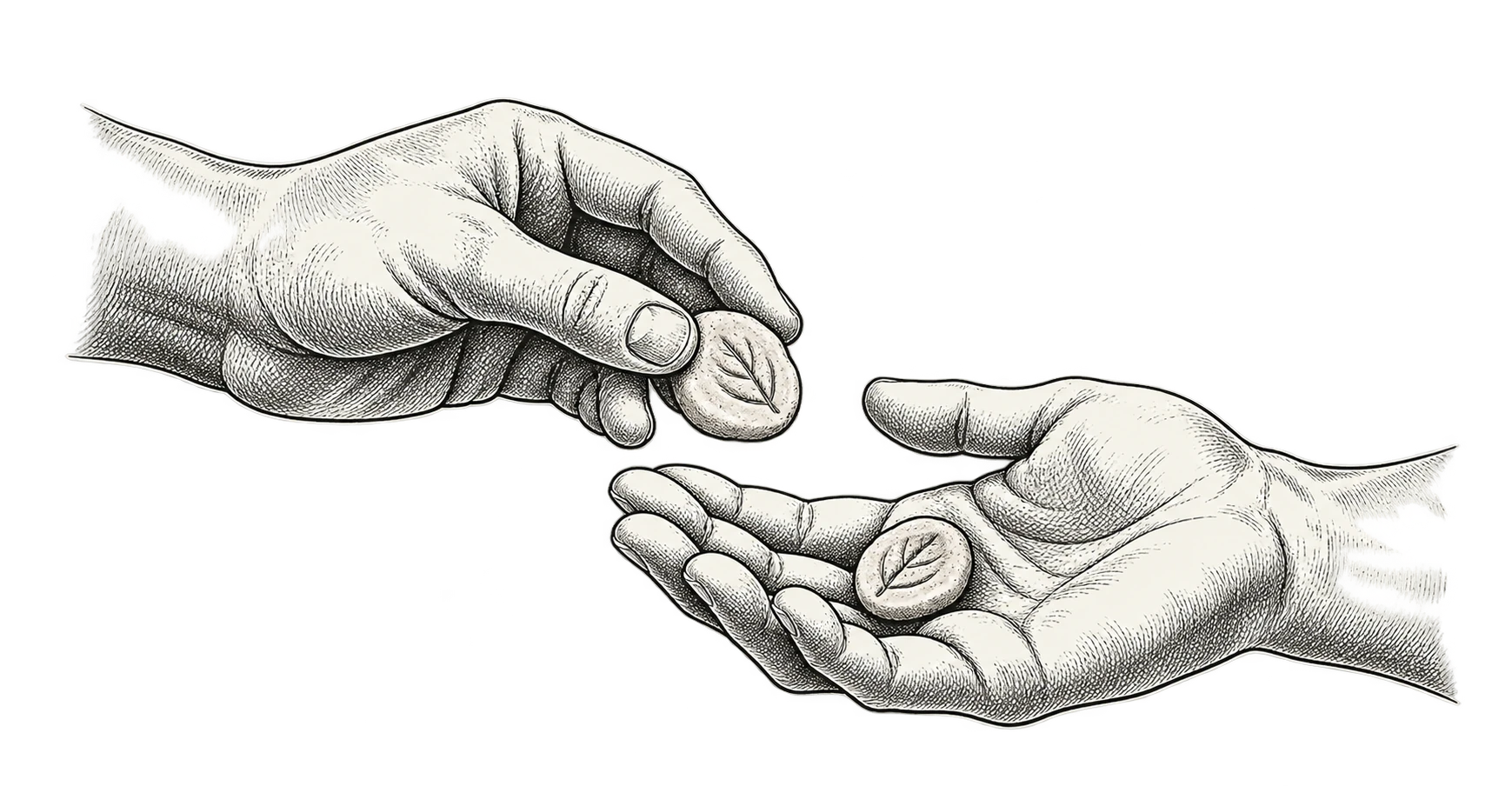
Make this working with a friend who wants to take part. There is no hidden petition and no need to speak for someone who is absent. Each of you will leave with a small token made alongside the other.
You can prepare them for St John’s Day or choose an occasion that belongs to your friendship. If you use another date, keep the source note with the working so the name does not become detached from its setting.
The fragments in the source
Frazer describes a Sicilian St John custom involving exchanged hairs, a potsherd broken in two, and a fragment kept by each participant. He reports the relationship as a lasting bond. The custom has a specific social setting; it is not simply a generic spell for keeping someone close.
This version uses two tokens made together. It omits hair and broken pottery, and asks for no lifelong oath.
What to gather
- A small piece of air-drying craft clay
- A smooth surface to work on
- A blunt wooden tool for making marks
- Two small envelopes or cloth pouches
Follow the clay maker’s drying instructions. Give yourselves time for the pieces to dry before exchanging them; the working can take place over more than one meeting.
Make the pair
Divide the clay into two similar portions and shape each into a small, flat piece with rounded edges. Set them side by side.
Choose a mark together. It could come from somewhere you have walked, a plant you both know, or an ordinary object that recalls a shared story. Keep it simple enough to recognise after the clay dries. You do not need to find an ancient symbol to make the choice meaningful.
Each person marks one token. Lay the two together while you talk about the friendship you already have. Name something you appreciate that the other person might not know you remember.
Leave the clay to dry as directed. When both pieces are ready, exchange them by hand. If you want spoken words, keep them small enough to mean: “I keep this with affection, and give yours freely.” That line is new wording for this adaptation.
Put your token somewhere you will recognise it. A pouch in a drawer is as suitable as a place on an altar. Neither person needs to display it to prove the friendship matters.
What the token asks
Agree between yourselves whether the pieces mark this occasion or an ongoing practice. They do not need to carry a promise you would hesitate to make aloud. Friendships change, and keeping a token should not become a test of loyalty.
If you later put it away, you can do so quietly and with care. The rite does not give either person a claim over the other.
Source and changes
James George Frazer, The Golden Bough, chapter XXXIII, in the discussion of Sicilian St John friendship customs. The paired clay pieces, shared design, exchange words, and approach to the commitment are contemporary additions. They should not be described as the historical Sicilian ceremony.
Explore the practice
Explore love spells and connection rituals for more context and related workings. For help choosing materials and recording your experience, read witchcraft for beginners.