The wedding-ring dream
Use a ring and a written circle in a bedside dream petition adapted from an 1885 handbook.
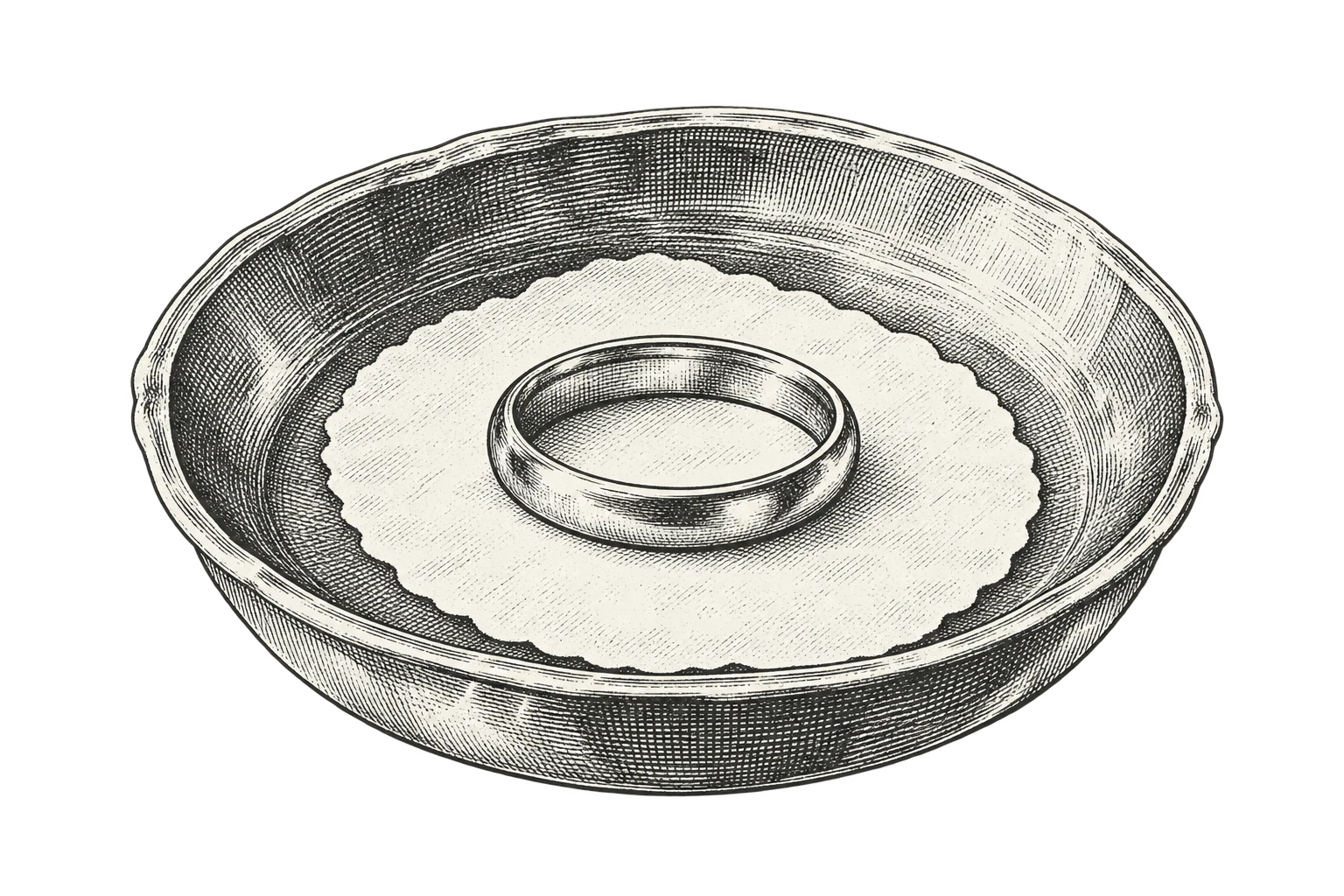
A wedding ring brings a promise into the working before any words are added. Use your own, or borrow one openly from someone who is comfortable with the purpose. A keepsake should not have to go missing for a charm to begin.
The printed “Magic ring” charm includes concealed borrowing, a suspended ring, and writing placed under the pillow. This adaptation rests the ring in a dish and asks about the commitment you are considering, rather than announcing who you must marry.
Prepare the circle
- Trace a circle on a small sheet of paper. Write your name and date outside it, and a question about commitment inside.
- Read the question aloud. Place the paper under a shallow dish and lay the ring in the dish, without suspending it over the bed.
- Before sleep, sit beside the arrangement briefly. If you use a spoken petition, ask for understanding in words you would be comfortable reading again in daylight.
- On waking, write any dream before moving the ring. Return it to its owner or ordinary place and put the question in your notebook.
When the dream is confused
Confusion is allowed to remain confusion. Noe’s account gives a stark interpretation to a dream that cannot be remembered; this version does not. A night’s poor recall says nothing dependable about your future marriage.
Keep the ring’s everyday meaning in view. It may belong to a living relationship, a bereavement, or a family story. That meaning need not disappear beneath the divination.
Source and reading notes
The ring and written circle come from the named charm. Open borrowing, resting placement, petition, and interpretation are contemporary changes.
A. H. Noe, The Witches’ Dream Book; and Fortune Teller (1885). “The magic ring,” p. 88.
Explore the practice
Explore divination rituals for more context and related workings. For help choosing materials and recording your experience, read witchcraft for beginners.