The four-wood treasure rod
A source note on a Swedish midsummer treasure rod and the construction details Frazer does not supply.
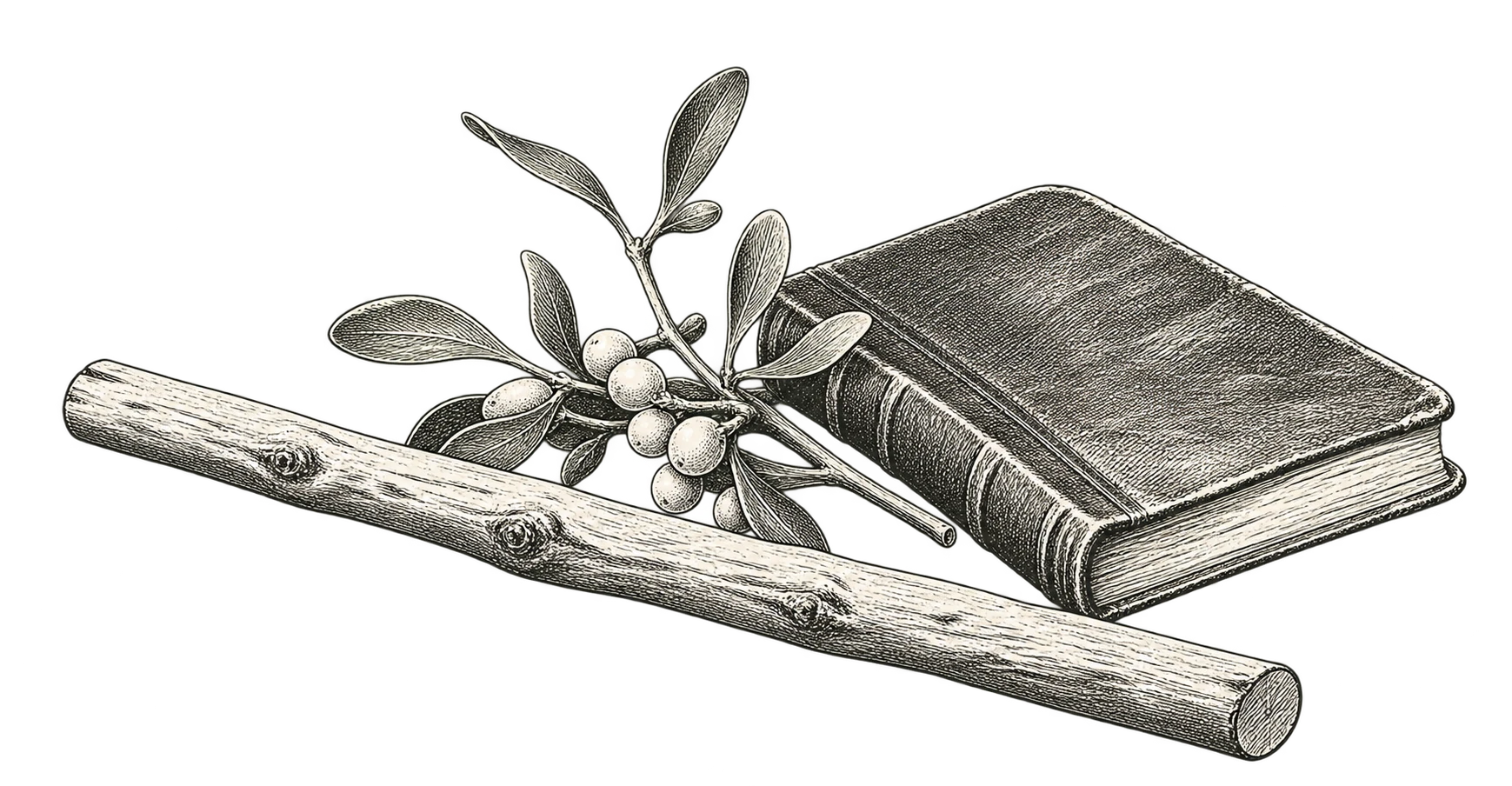
A precise number can make a short description sound more complete than it is. Four kinds of wood, one of them mistletoe, seem to promise a buildable tool. Read the passage closely and the other woods are not named.
Frazer describes Swedish treasure-seeking rods associated with Midsummer Eve. His account includes mistletoe alone as well as a four-wood form containing it. The rod’s supposed movement over treasure is the reported sign. This is a description of a belief, not a complete workshop manual.
The missing woods matter
Choosing oak, hazel, and rowan to fill the gaps might produce an attractive modern object. It would also add information the passage does not contain. A correspondence list from another book would not turn those choices into this account’s original materials.
The same applies to binding, length, handling, and spoken words. We have not supplied them under the heading of tradition. A useful archive can show a reader exactly where a description stops.
Read it beside other rods
Forsyth’s arrow and rod discussion offers a different problem: instruments and terms overlap in the sources he compiles. Neither book establishes that every forked stick, casting rod, and treasure wand belongs to one unchanged practice.
If you sketch the four-wood motif, leave the unnamed woods unnamed. A labelled absence is part of a good record. It allows a later source to be compared honestly rather than forcing it to fit a design already chosen.
Source and reading notes
The four-wood description is retained as historical material. No claim is made that a rod locates treasure, and no missing construction details have been invented.
James George Frazer, The Golden Bough. Chapter LXVIII.