The kept Yule-log fragment
Follow the retained piece of a Yule log through an English account, with its protective claims kept in their historical setting.
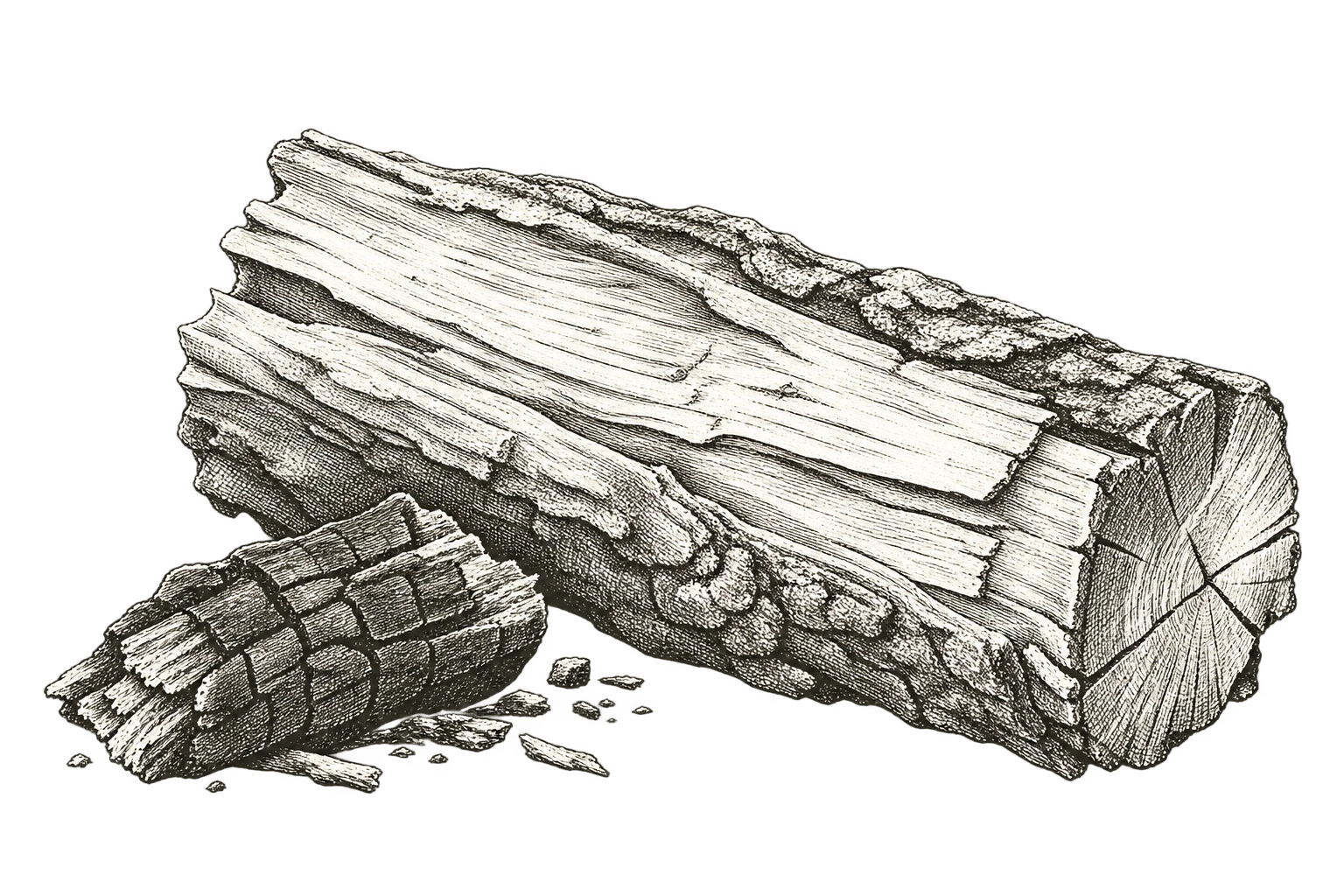
The fire is not the only part of a Yule-log custom worth following. A fragment kept after the celebration carries the story into the next year. Its significance depends on being a remnant of that particular log.
In an English account Frazer cites through the antiquary John Brand, a saved piece helps light the next Yule log. Protection is also attributed to the remains. Elsewhere in the chapter, other localities give their fragments different uses. Those differences are more useful than a single list headed “what Yule ash does”.
A remnant with a history
The retained piece joins two occasions. One year supplies something to the next. That continuity can be understood without deciding that any piece of bought charcoal has the same place in the custom.
For a household that does not use a fire, a dated card or wooden keepsake could mark a new annual practice. It should be described as new. Naming a substitution does not make it less personal; it stops it borrowing evidence it has not earned.
Protection in the printed account
Claims about lightning, household fire, illness, and crops appear in the wider survey. They tell us what the objects were credited with doing. They do not establish actual protection, and stored ash should not be made into a remedy or put in food or drinking water on that basis.
This is a historical article rather than a hearth-lighting guide. The part to carry into your notebook is the relationship between a remnant and its occasion, with the place and source kept attached.
Source and reading notes
The English remnant account is distinguished from neighbouring regional examples. Frazer’s broader claims about the origins of fire festivals are not treated as established history.
James George Frazer, The Golden Bough. Chapter LXII.7.