The midsummer oak-blossom dream
Explore the Shropshire story of a fleeting oak bloom and keep it distinct from Frazer’s mistletoe interpretation.
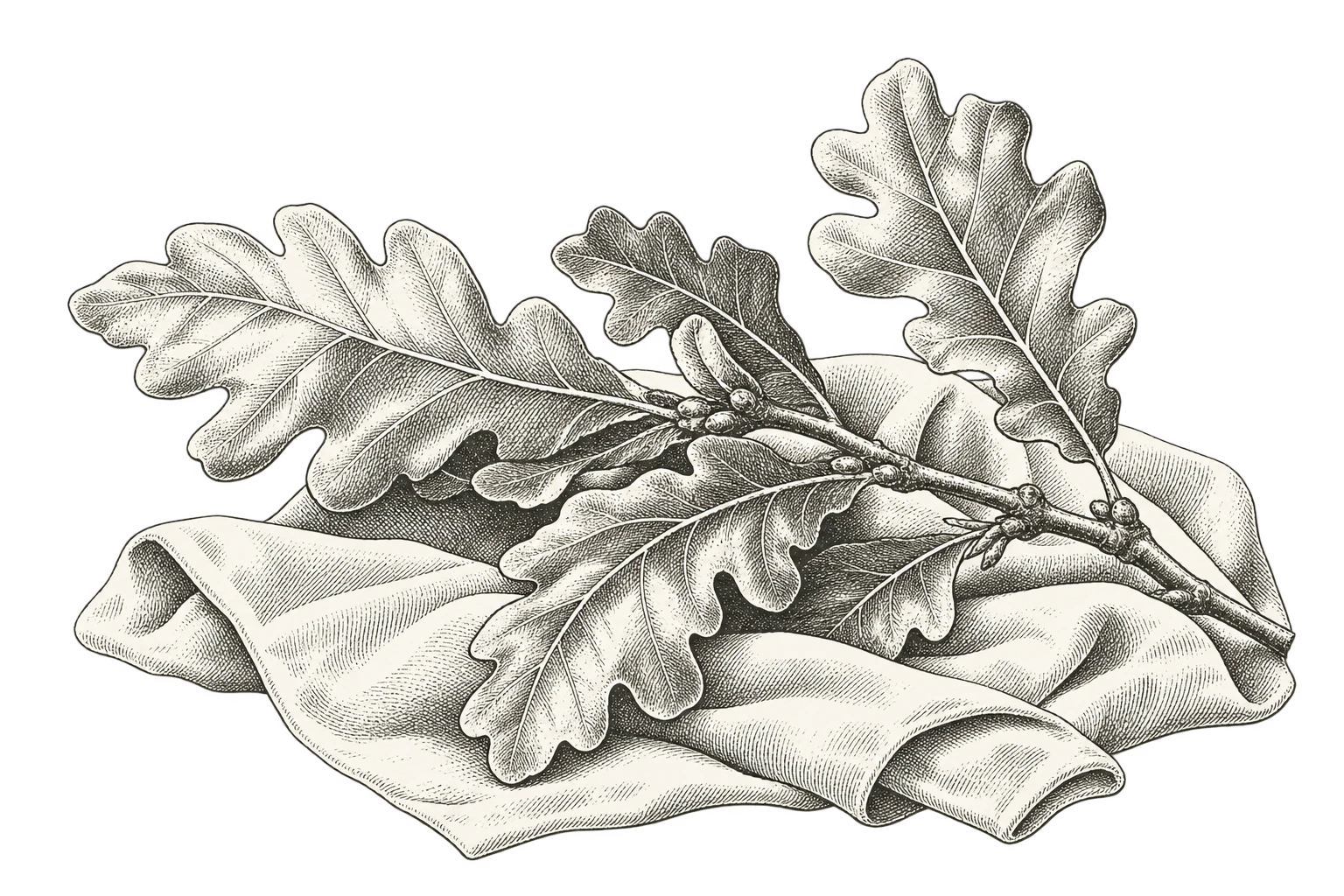
The cloth beneath the oak is the memorable detail. In the Pulverbatch story Frazer records, the midsummer blossom vanishes before daylight, leaving only dust for the dreamer to find. The reader arrives after the flower has gone.
The promised dream concerns a future husband. It belongs to a particular account from Shropshire, not to every oak or every midsummer practice. Frazer then proposes that this elusive blossom may really be mistletoe in another form of the story.
Where the account ends
Notice the change in certainty. A report of what people believed is one kind of evidence. A later writer’s explanation of why they believed it is another. Frazer’s suggestion about mistletoe should not be copied into an entry as if the people of Pulverbatch had supplied it themselves.
Nor is the tale a botanical instruction for collecting ordinary oak pollen or other dust. The fleeting midsummer bloom is the object of the legend. Replacing it with an unidentified powder would make a new practice, and would lose the distinction that interests us here.
A place in the dream notebook
You can study this story alongside the Welsh mistletoe dream passage without merging the two. Compare the material placed near the sleeper, the means of obtaining it, and the marriage promise attached to it. The shared dream theme is worth noting even when a direct historical relationship remains unproved.
For a bedside working with a clearly stated contemporary method, the mistletoe paper charm uses a drawn plant and an open question. It requires no mysterious substance from beneath a tree.
Source and reading notes
The locality and reported belief are retained. Frazer’s explanation is identified as interpretation rather than a botanical or historical conclusion.
James George Frazer, The Golden Bough. Chapter LXVIII, Pulverbatch account.