The scattered points of geomancy
Read Forsyth’s compressed description of geomancy without confusing a mention of dots with a complete casting method.
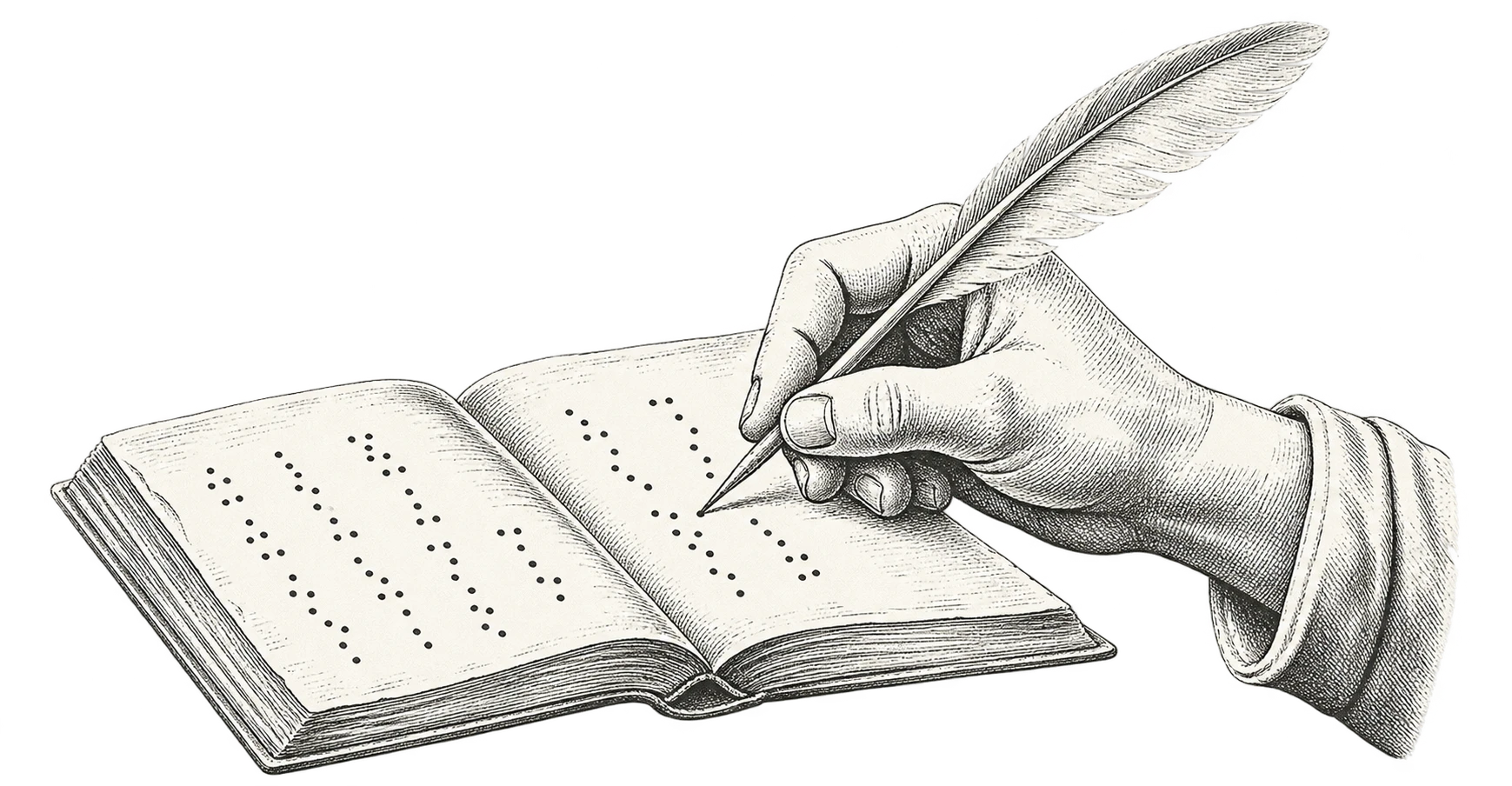
A page of scattered points is a beginning, not a complete geomantic reading. Forsyth describes random marks and the figures considered in them, then gives another account involving the earth. His paragraph is useful for the vocabulary it preserves. It does not teach an entire system.
This is worth saying because a sparse description can be tempting. A writer can fill its gaps with familiar numbers and make the result sound inherited. The reader then has no way to tell which rules came from the source.
Dots need rules
To publish a practical method, we would need to specify how marks are made, how figures are derived, which figures belong in the system, how they are arranged, and how an answer is read. Those choices cannot be recovered simply by staring at a random page.
Forsyth also reports origin claims through other authors. They should remain attributed claims rather than a secure history of every practice called geomancy.
Drawing with an honest label
A free drawing of points can be a contemporary image-reading exercise. If you use it that way, describe what you are doing: making marks, finding a shape, and considering an association. Do not attach a traditional figure name or chart to it without learning that method from a source that actually teaches it.
Keeping this distinction leaves room for study. It also respects geomancy as something with procedures to learn, rather than a decorative word for any pattern on paper.
Source and reading notes
The post explains the limits of this particular summary. It makes no claim to teach a complete historical geomantic practice.
J. S. Forsyth, Demonologia (1827). Geomancy, p. 149.