The witches’ chain
Read the group, objects, and marriage omens in Noe’s witches’ chain without presenting its fire ritual as a bedside craft.
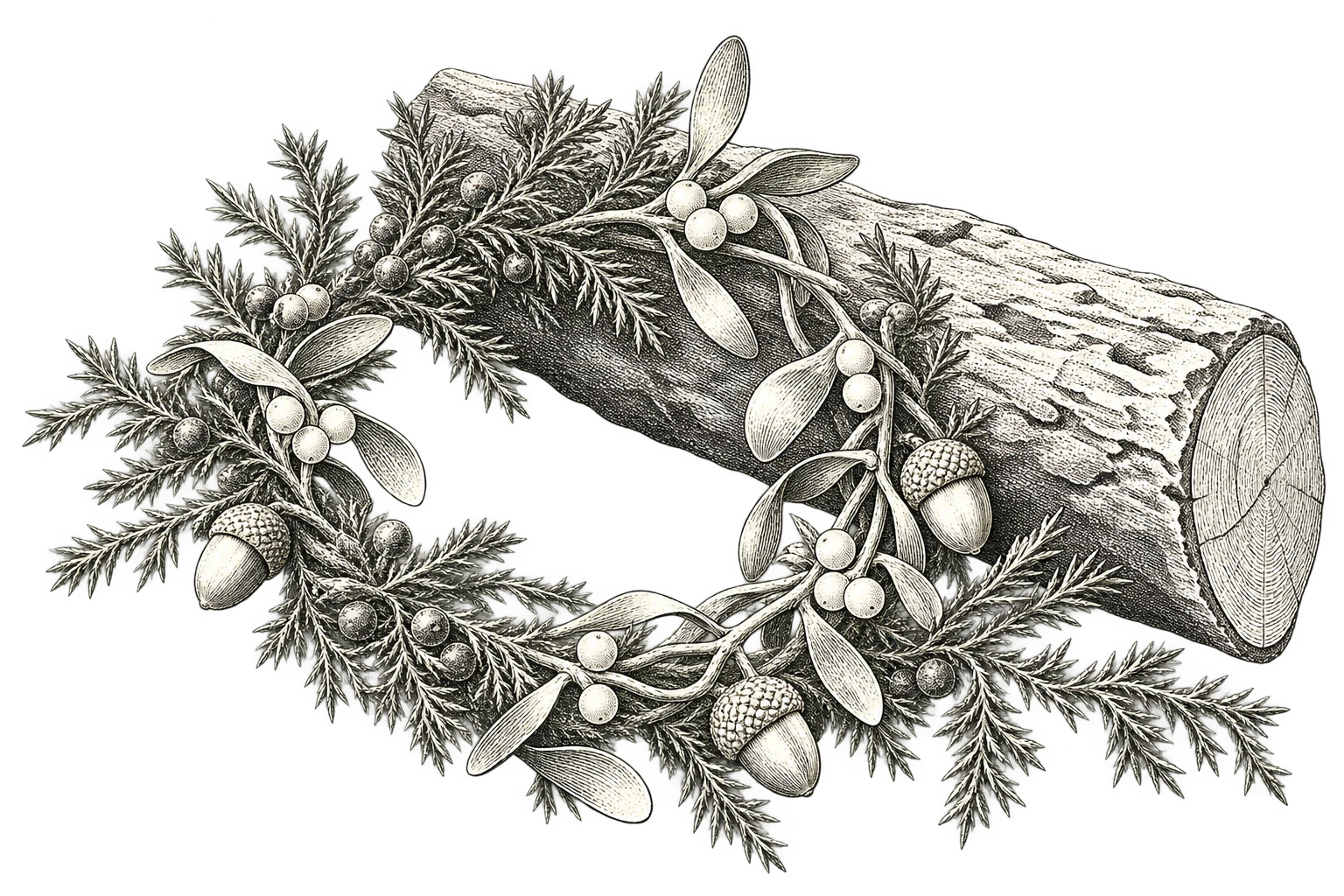
The chain in this charm is made by three people. That is easy to lose when an old recipe is reduced to a picture of berries and acorns. Shared preparation, shared watching, and separate expected visions all belong to the account.
Noe describes juniper, mistletoe berries, and acorns arranged around a log for burning. Prayer books opened at the marriage service sit within the scene. The article is historical: we have not turned this into instructions for an indoor fire working.
Company and separate visions
The printed claim is unusual. Each participant is meant to see her own future spouse while the others do not see him. That gives the group a shared event but keeps the central experience private. A reader should notice both parts before treating the account as a simple communal omen.
Its alternative images for those who will not marry reveal the handbook’s pressure around marriage. They do not describe what an unmarried life is worth. Keeping that distinction allows the recipe to be studied without carrying its judgement into a modern gathering.
Why a craft version would differ
A paper chain made with friends might be a pleasant new working. Without the source’s preparation and fire, it would not be the printed witches’ chain reproduced. New materials also would not preserve the vision promise merely by keeping the title.
For a finished group working whose substitutions are explained, use the St John friendship tokens. That rite asks each person to speak for themselves, and gives the shared object a clear place outside the fire.
Source and reading notes
The group and objects are described as features of a printed account. No fire-building, burning, or ingestion instructions are supplied.
A. H. Noe, The Witches’ Dream Book; and Fortune Teller (1885). “The witches’ chain,” p. 87.