The bride-cake dream
Keep a small wedding keepsake beside the bed for an adapted dream charm, with the original cake-and-ring motif explained.
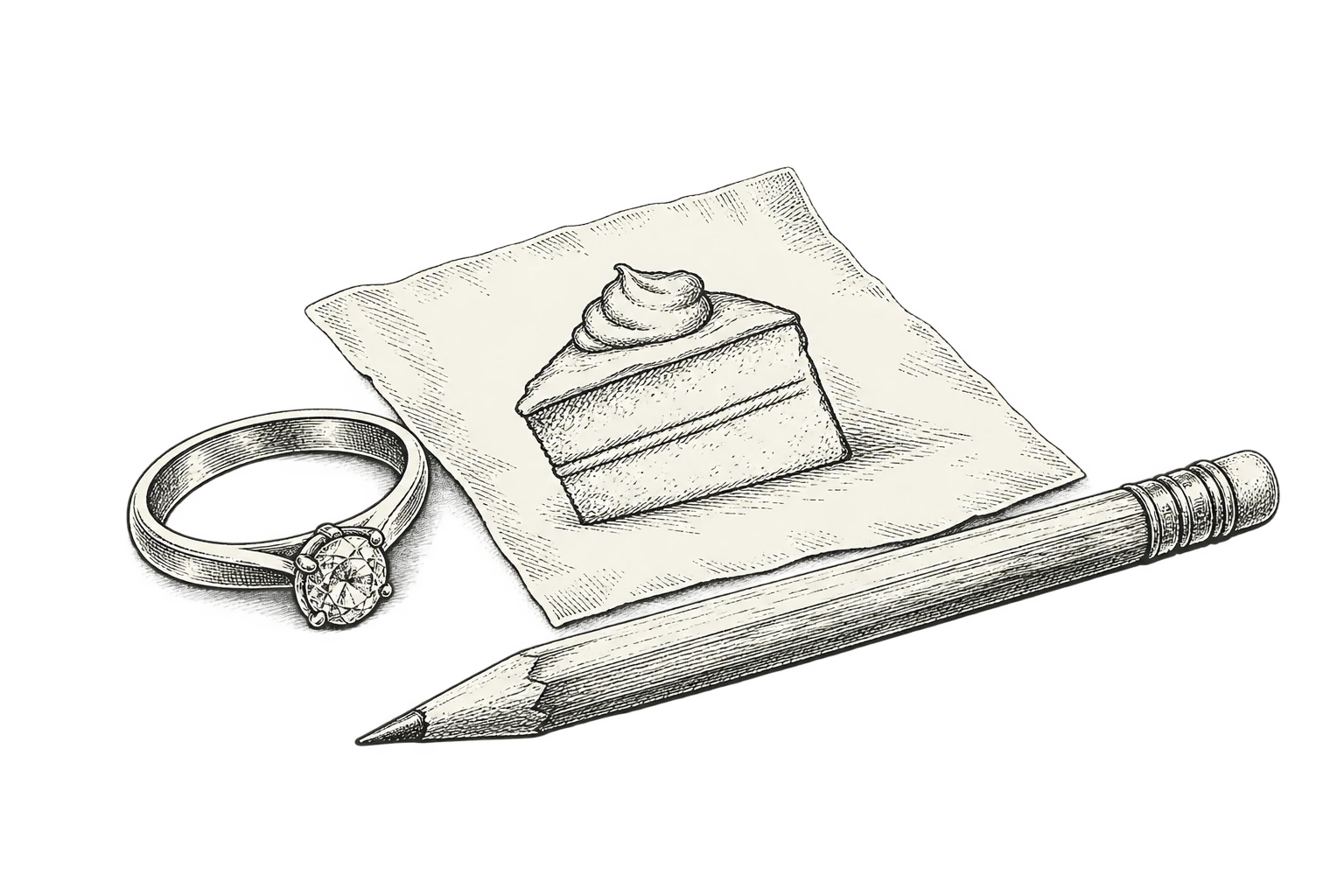
A piece of wedding cake carries a particular occasion with it: who cut it, who passed the plate, and which conversation was still going when you left. That association is what gives this dream charm its setting.
In Noe’s account, cake is passed through a wedding ring and placed beneath the sleeper’s head. This version uses a drawing of the cake instead. It keeps food out of the bedding and leaves an actual wedding ring available to its owner.
Make the keepsake
- Draw a small slice of cake on a card and write the wedding date beneath it. If you did not attend a wedding, choose another dream working rather than inventing a keepsake.
- Place a ring you own flat on the card and trace its outline around the drawing. Return the ring to its ordinary place.
- Write a question about the kind of relationship or shared life you hope to build. Read it once and leave the card beside the bed.
- In the morning, record remembered images before turning the card over. Keep it in your notebook or recycle it when the working feels complete.
Let the occasion stay particular
A dream may borrow a face from the celebration simply because you have seen it recently. You can consider what the person represented in the dream without deciding they are a destined spouse.
The paper version is new, not a historical substitute documented by this source. If you are collecting wedding folklore, retain a note of the original action alongside your own record.
Source and reading notes
The cake-and-ring sequence is the printed motif. The drawing, traced circle, bedside placement, and question are a contemporary adaptation.
A. H. Noe, The Witches’ Dream Book; and Fortune Teller (1885). “By bride cake,” p. 90.
Explore the practice
Explore divination rituals for more context and related workings. For help choosing materials and recording your experience, read witchcraft for beginners.