The coffee-ground reading
Read the shapes left in a cool coffee cup with a small, attributed selection of symbols from an 1885 handbook.
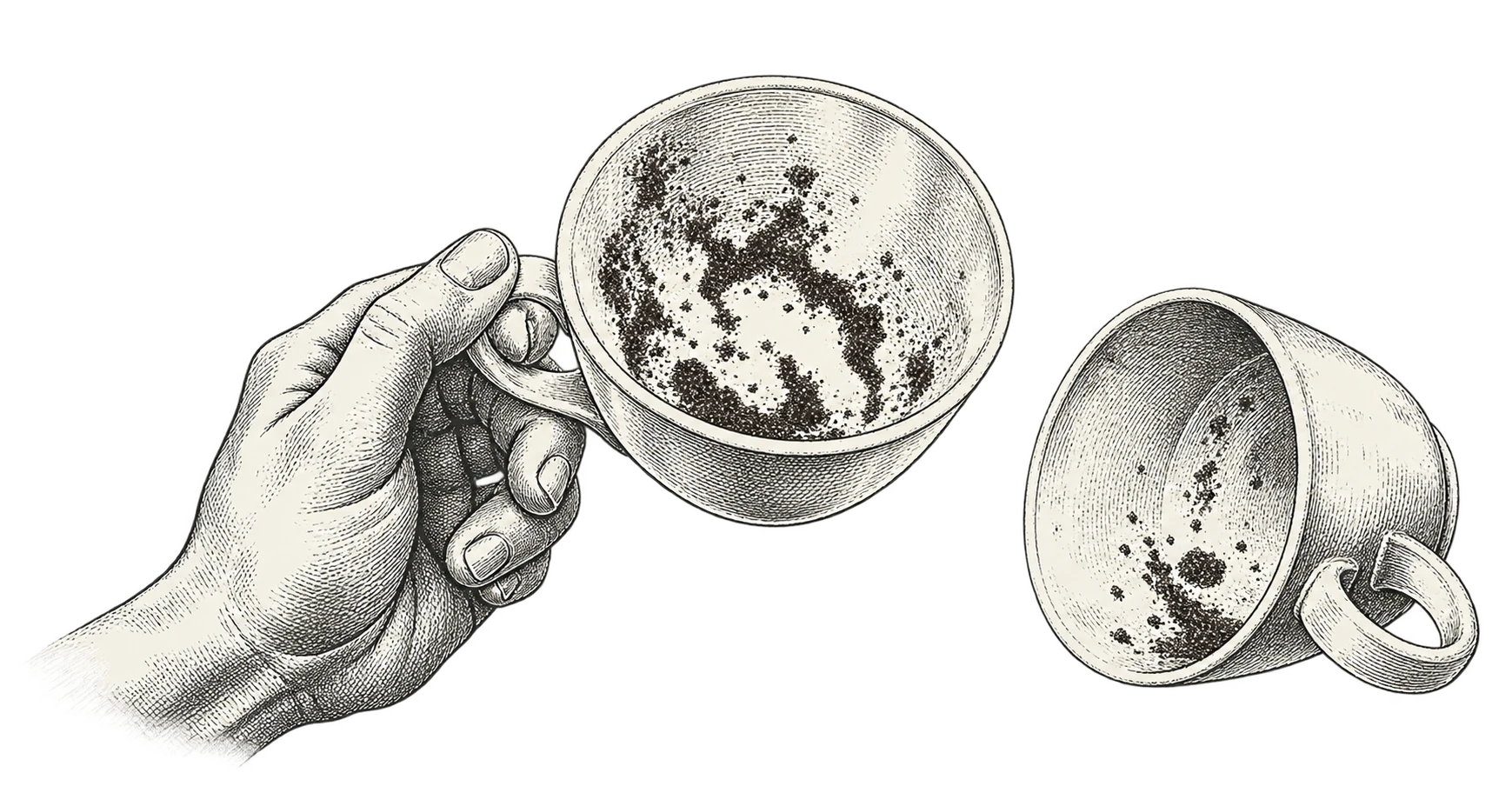
A light-coloured cup makes the grounds easier to see. Let the coffee cool before turning the cup; the reading can wait. What you want is a thin coating of grounds, not a hot spill across the saucer.
Noe groups tea and coffee grounds in one method. This page concentrates on coffee and keeps the archive’s tea-leaf reading as a related practice, not evidence for a single origin shared by every cup-reading tradition.
Turn the cup
- Put a small amount of cool, damp coffee grounds in a white cup. Turn the cup gently so some adhere to its sides.
- Invert it over a saucer briefly to let loose liquid drain. Turn it upright again and write your question beside a sketch of the cup.
- Choose up to three shapes you can genuinely distinguish. Draw them before consulting the examples below.
- Read the selected associations together and write where your interpretation came from: the printed list, the shape itself, or a personal memory.
A few printed symbols
In Noe’s account, a ring is linked with marriage, clover with luck, an anchor with hope and commerce, a letter with news, and a star with happiness. Position and surrounding marks change several of his readings. These are selected examples, not a complete key or a universal vocabulary.
If you see no recognisable shape, record the pattern as it is. You do not need to find a stranger’s face or manufacture a warning to make the sitting count.
When someone else reads
Ask the other reader to describe the grounds before offering a story. A useful difference of opinion can begin with “I see a branch where you see a road.” Keep both sketches if you wish. Avoid turning a vague figure into an accusation about a named person.
Source and reading notes
The coating and draining method and selected associations come from the printed account. The limited selection, drawing sequence, and separation of interpretation are our reading practice.
A. H. Noe, The Witches’ Dream Book; and Fortune Teller (1885). Cup-ground reading, p. 94 onward.
Explore the practice
Explore divination rituals for more context and related workings. For help choosing materials and recording your experience, read witchcraft for beginners.