The eight-day seed garden
Tend a small pot for eight days, with a clear distinction between this growing practice and the gardens of Adonis.
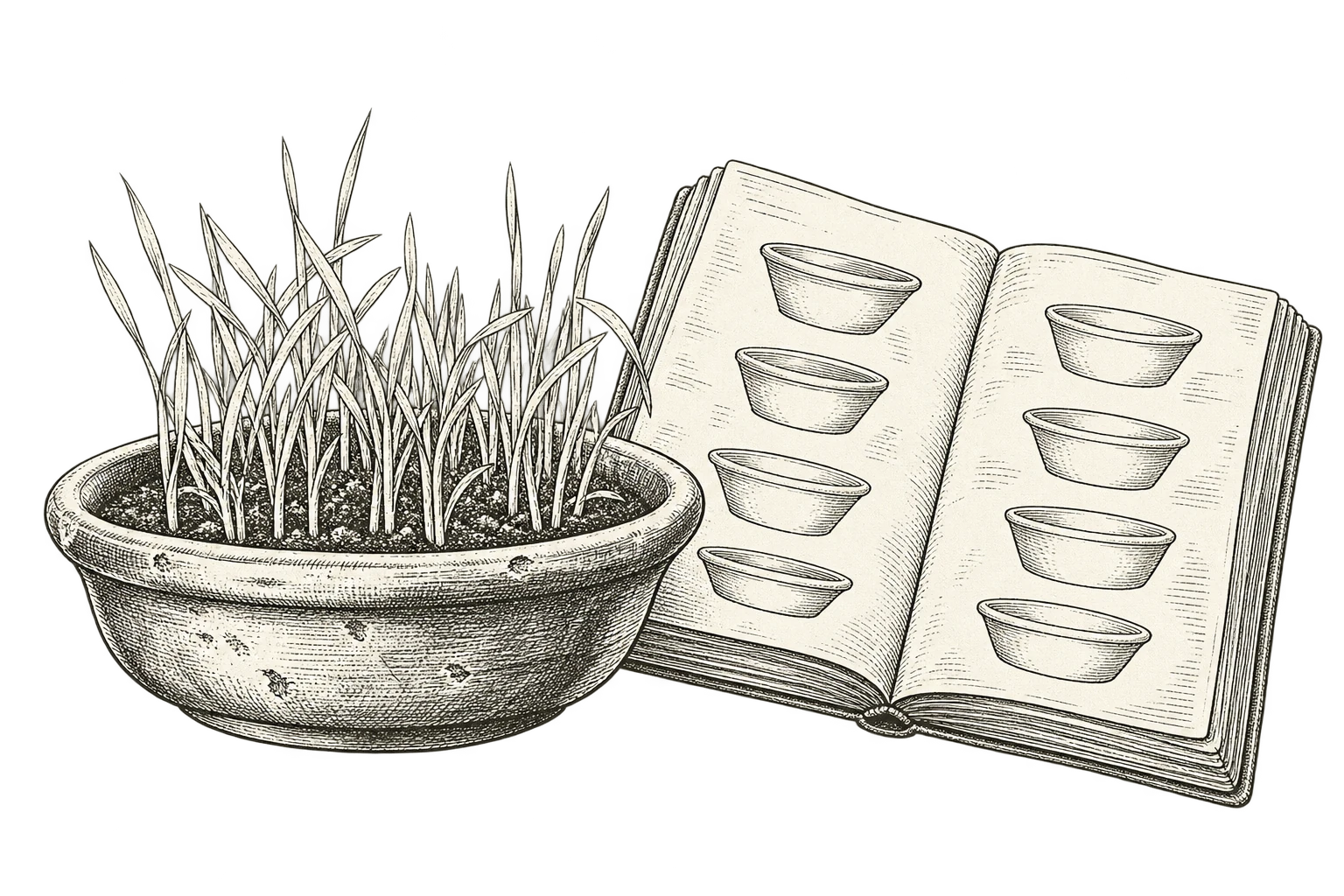
Keep this little garden where you will see it each morning. Its working is in tending: checking the soil, noticing the first shoot, and returning when there seems to be no change.
Frazer describes pots associated with Adonis grown for eight days before their ritual disposal. This household adaptation keeps the eight-day period of attention and lets the seedlings continue growing. It does not recreate the festival or make an offering on behalf of its worshippers.
Begin the garden
- Fill a clean pot with drainage holes using suitable potting compost. Set it on a saucer and sow untreated wheat or barley seed according to its packet instructions.
- Water gently and choose a suitable light position. Mark the sowing date and the eighth day on a label.
- On each of the next eight days, check whether the compost needs water. Add water only when needed. Draw one small view of the pot or note what has changed.
- On the eighth day, sit with the garden for a few minutes. Offer thanks for the care it has received, then decide where it will grow next.
Let it keep growing
Eight days is the duration of this working, not a deadline for a successful crop. Temperature, seed condition, and light affect what happens in the pot. Keep empty days in your record too.
You can leave the pot in place and continue tending it. Do not throw compost or seedlings into a spring or the sea to imitate the printed account. A small garden can close its ritual period while its plants are still alive.
Source and reading notes
The eight-day motif belongs to the gardens of Adonis described here. The growing instructions, daily record, and continued care are Okkult’s adaptation; Frazer’s interpretation of the festival is his argument, not a settled account of its origins.
James George Frazer, The Golden Bough. Chapter XXXIII.
Explore the practice
Explore money spells and prosperity rituals for more context and related workings. For help choosing materials and recording your experience, read witchcraft for beginners.