The sealed rose dream
Prepare a folded rose-petal packet for a contemporary dream charm without fumes, burial, or burning.
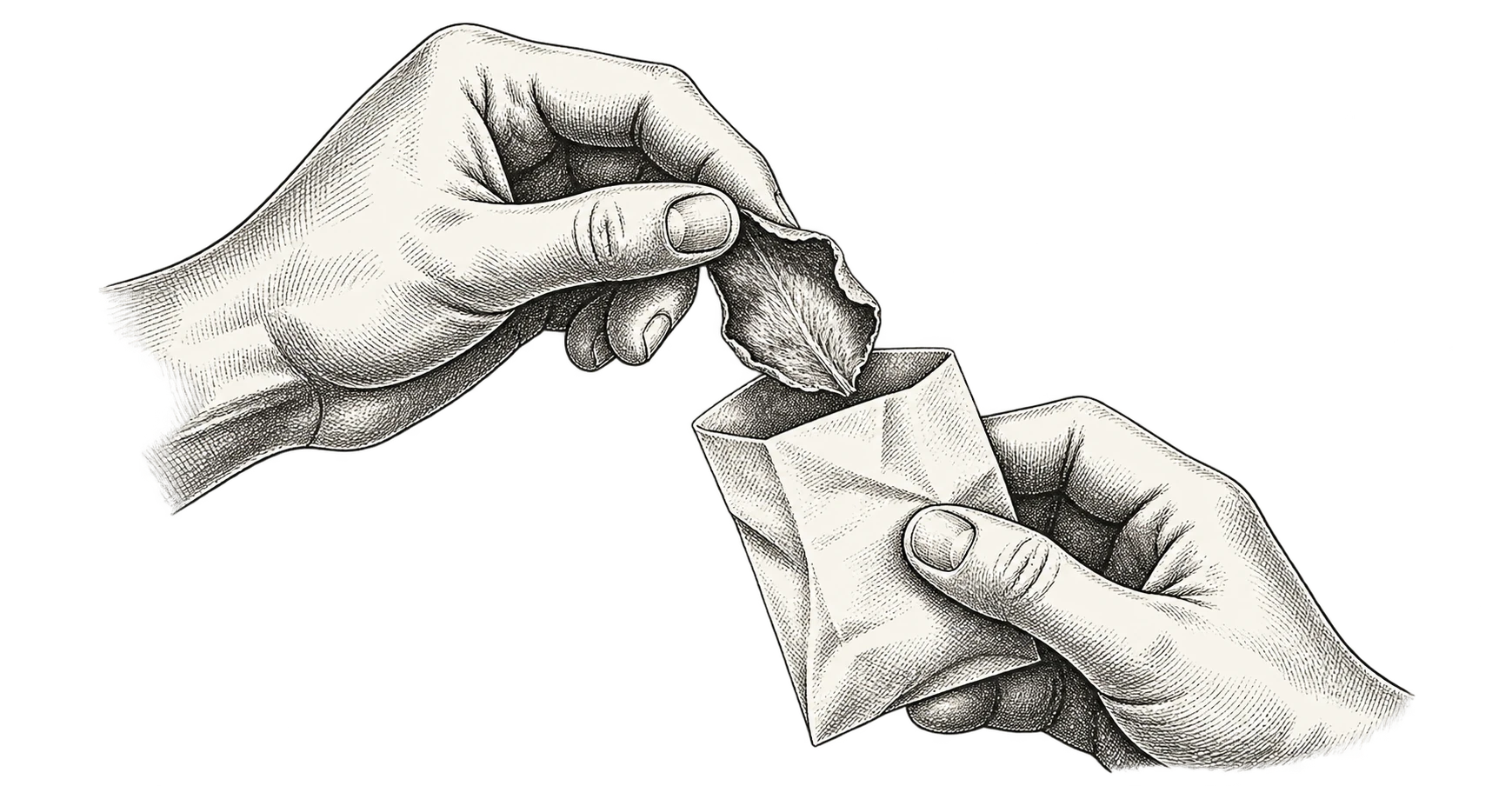
Choose a dry rose petal that will not stain the paper. A petal saved from a bouquet can carry its own occasion; one bought for craft use can simply be named for what it is. You do not need to invent a significant meeting for it.
The “Magic rose” in Noe’s handbook is a much more elaborate recipe, with dates, fumes, seals, burial, and later sleep. This small packet is a contemporary working inspired by its flower-and-paper motif. It does not reproduce those preparations.
Close the packet
- Lay the petal in a folded sheet of paper. On a separate inner fold, write a question about love that you are willing to consider honestly.
- Fold the paper into a small packet. Close it with a removable paper tab or a little tape, keeping the petal dry.
- Set the packet beside the bed. Before sleep, rest a hand on it and read your question from memory; let it be enough to have asked.
- On waking, record what returns. Open the packet afterwards and decide whether to keep the petal in your notebook or retire it.
Let the seal have an ending
A packet does not need to remain closed indefinitely to preserve a working. Here the opening belongs to the morning. If no dream is recalled, you can still open it and finish.
We use no sulphur, smoke treatment, tree burial, or final burning. Those omissions change the rite; the label “contemporary adaptation” tells the reader where the printed method stops and this one begins.
Source and reading notes
The flower packet supplies the starting motif. All practical instructions above are a new arrangement with ordinary paper and a dried petal.
A. H. Noe, The Witches’ Dream Book; and Fortune Teller (1885). “Magic rose,” p. 86.
Explore the practice
Explore divination rituals for more context and related workings. For help choosing materials and recording your experience, read witchcraft for beginners.