The three wind knots
Tie and release three loose knots in a cord charm for movement after delay, inspired by recorded wind folklore.
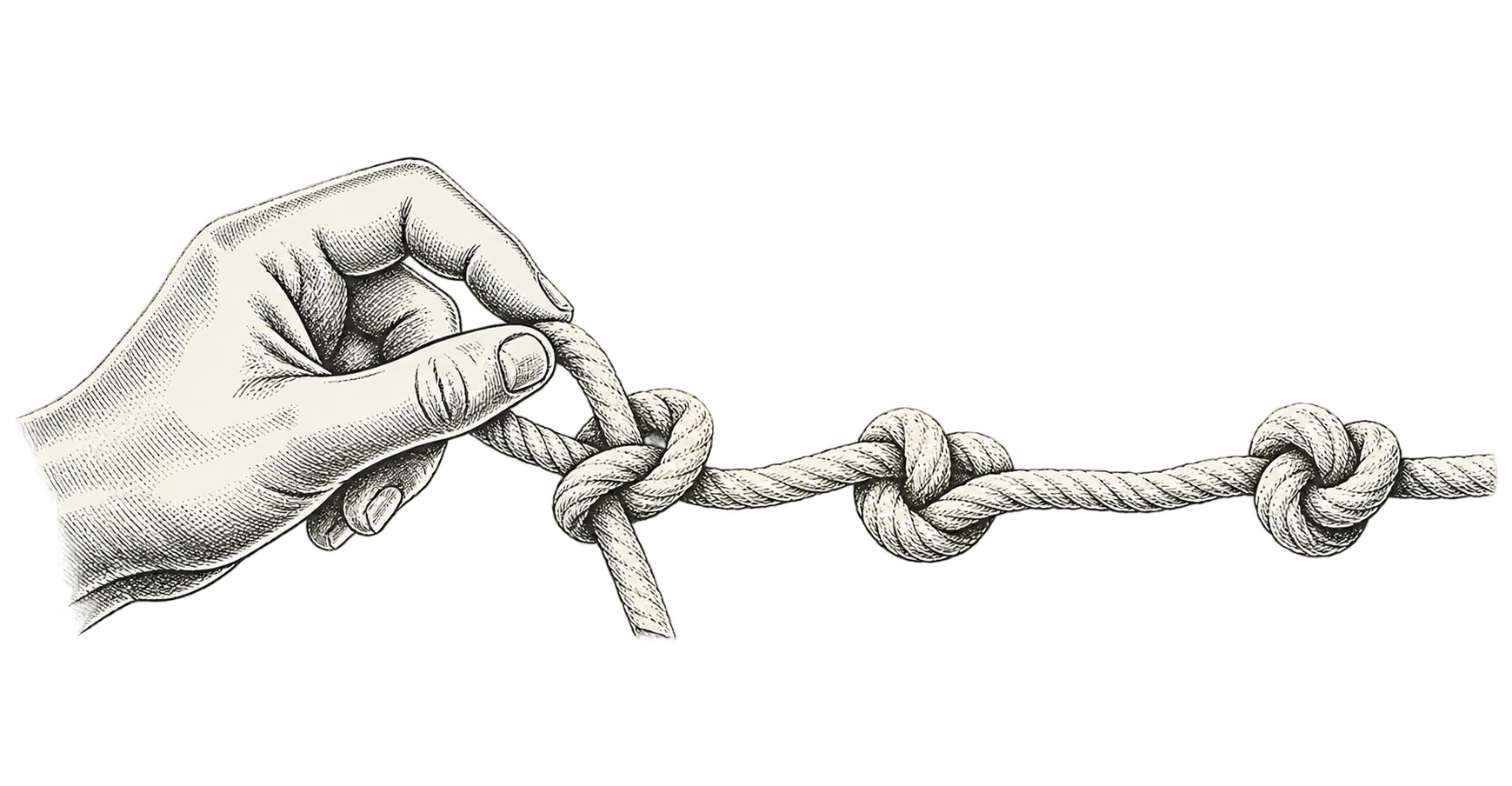
For this charm, choose a cord that will yield when you pull it. A narrow ribbon works well. Fine sewing thread does not: once its knots tighten, you will spend the working picking at them with your nails.
You will tie three knots, then release them one at a time. The older story concerns winds sold to sailors. This version keeps the loosening gesture as a working for movement after a period of delay. It is intended for a doorstep or a table by an open window, away from any actual demands of sailing or weather forecasting.
The wind in the cord
Frazer describes mariners buying wind enclosed in three knots. In one account, each knot releases a stronger wind, from a moderate breeze to a hurricane. He also records the motif in several northern regions. It is a striking image, but those accounts should not be flattened into one universal sailors’ spell.
The instructions here are a new arrangement, not a recovered set of words from those mariners.
What to gather
- A ribbon or soft cord about the length of your forearm
- A place to sit with room to lay it flat
- Your notebook, if you keep a record of workings
Tie and release
Decide what you are asking to move. Be specific enough that you can speak it in a sentence: an unfinished working, a difficult beginning, a decision you have been circling.
Tie a loose knot near one end of the cord. Leave a gap, tie the second, then leave another gap before the third. Check that you can undo each with your fingers.
Lay the cord across your palms. Speak your petition once. There is no need to make it grander than the thing you mean.
Untie the first knot and say, “Let there be a little movement.” Pause before touching the second. Notice whether you want to hurry.
Untie the second: “Let the way open.” Then loosen the last knot: “Let me go when it is time.” These lines are written for this adaptation; use your own if they fit better.
Run the unknotted cord through your hands and put it away. You can use it again. Leaving the cord outdoors or releasing it into the wind is not part of this version.
After the working
If you keep notes, record what you asked for and how the knots actually behaved. A snag tells you something about the cord, not whether your petition has been refused. Give the working time to settle before deciding what it meant to you.
Source and changes
James George Frazer, The Golden Bough, chapter V, section 4, “The magical control of the wind.” The personal petition, speaking lines, and indoor arrangement above are contemporary additions. None is presented as a way to summon a storm.
Explore the practice
Explore luck spells for more context and related workings. For help choosing materials and recording your experience, read witchcraft for beginners.