Knot magic.
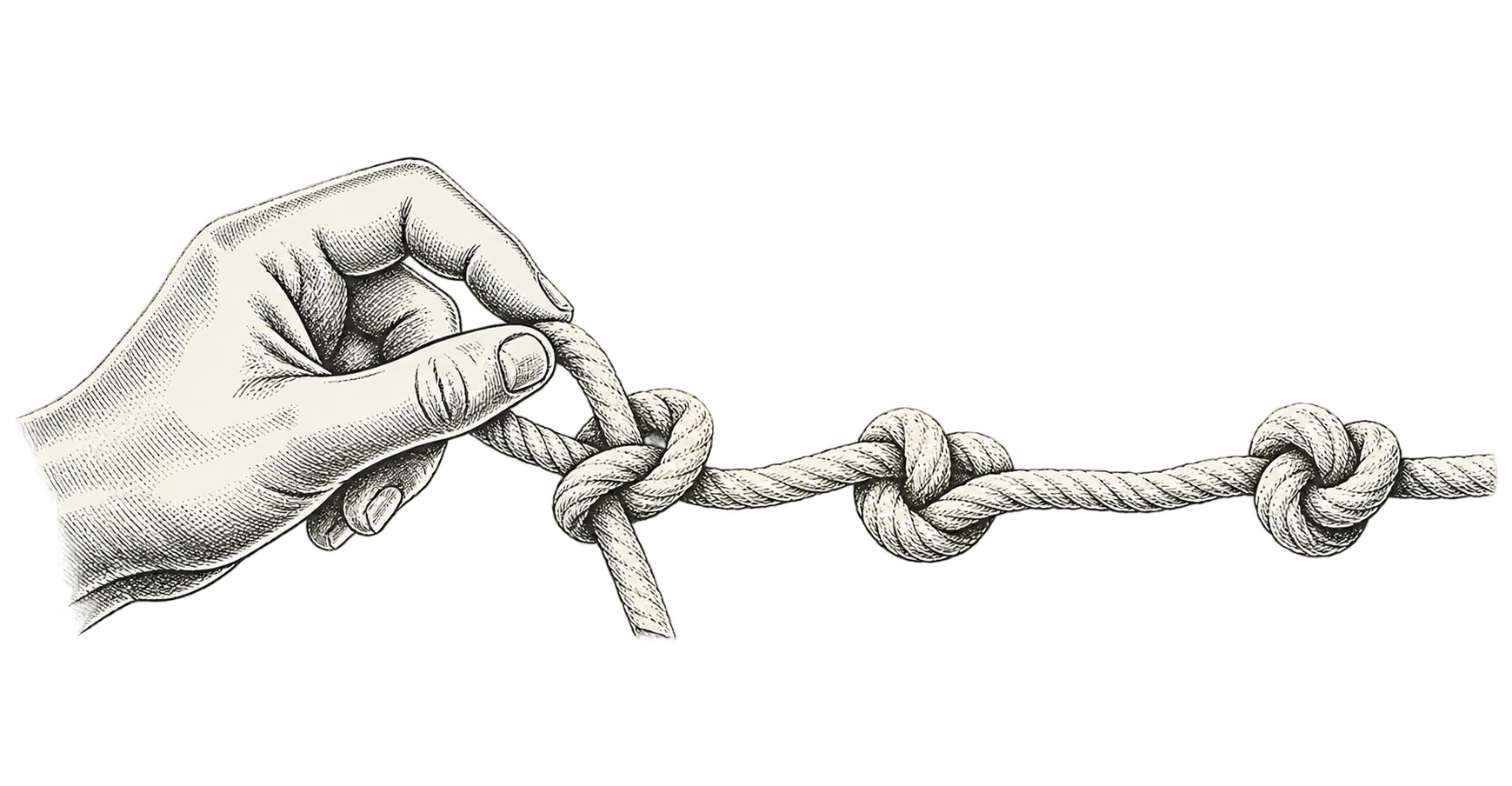
Tie a loose knot, give it a meaning and decide when to undo it. This guide brings together complete cord practices, a seven-knot record and particular book sources.
Give the knot a meaning
In the contemporary exercises here, knot magic means assigning a purpose to tying, keeping or loosening a cord. The knot makes a chosen intention tangible. Its meaning comes from the method you are following and the record you keep.
A single reminder, seven conditions and a printed knot verse are different arrangements. Start with one complete exercise. A cord colour, number or direction does not provide a universal key to every tradition or another person’s intentions.
Choose a cord practice
Choose the job you want the cord to do. Each suggestion leads to a complete archive entry with its own ending.
Give each knot a place
The seven-knot clearing matches seven positions to a written list. Choose one practical action and a review date, then untie the cord. Unused positions do not need invented problems.
Read the seven-knot clearingLoosen three knots
The three-wind-knots entry adapts a particular recorded motif into a contemporary personal petition. Its source note identifies the changed purpose, new words and indoor ending.
Read the three-wind-knots practiceKeep one care action
The red-thread ritual uses one knot as a reminder in an existing willing, reciprocal relationship. Write an action you can take and untie the knot after following through.
Read the red-thread ritualChoose one complete method and keep its intention, source and closing together. All the reference notes remain below.
Choose a cord you can undo
Use a soft ribbon or cord already available to you. Test a loose knot before beginning; leave enough length to handle it and enough space to tell the knots apart. This is a tabletop object, with no need to tie anything around the body.
| Material | Use | Alternative |
|---|---|---|
| Soft ribbon or cord | Holds loose, visible knots that can be undone. | Draw loops on paper or fold paper tabs. |
| Paper and pencil | Keeps the intention, knot order and review date together. | Use a plain digital note beside the arrangement. |
| A clear surface | Lets the cord lie flat without catching on other objects. | Lay a tray on an ordinary table. |
A three-knot intention practice
This is an original Okkult exercise, separate from the wind-folklore adaptation. Allow about ten minutes. Choose one small task within your control; no particular colour, spoken rhyme or lunar date is required.
- Write a task and the next practical action. For example, “Begin the letter” and “Write its opening paragraph this evening.” Add a date to review it.
- Test the cord, then tie three loose, spaced knots. Assign the first to the task, the second to the action and the third to the review date. Read the matching note as you tie each one.
- Lay the cord beside the written record. Check that you can identify each knot from the same end. This is a reminder of the plan; it does not establish that the task will succeed.
- Put the cord away off the body, in a contained place away from children and pets. Complete the action when you planned it.
- At the review, write what you actually did. Untie the knots and reuse the cord. If the action remains unfinished, choose a new ordinary next step rather than leaving the practice open indefinitely.
When you want seven knots
Use the seven-knot clearing when a household reset benefits from a short list of conditions. Each knot needs a matching written position; unused boxes can stay marked “not used.” The number provides a structure for this version, not seven guaranteed changes.
The complete entry explains the knot order, the pause after the fourth, a fictional desk-reset example and the ending. It uses the cord, paper and a clear surface throughout. You do not need to add a jar, burn the cord or wait for an exact seventh day.
Two particular book motifs
In The Golden Bough, V.4, Frazer reports a story of sailors purchasing wind held in three knots, with stronger winds associated with successive openings. This is the book’s reported account. Okkult’s three-wind-knots entry changes the purpose to a personal delayed beginning and supplies new words and an indoor closing.
Noe’s 1885 handbook, page 90, pairs a left garter with a right stocking and ties knots at commas in a marriage-dream verse. The archive adaptation changes the wording, fixes three knots and places the bundle beside a notebook at home. These details do not supply an ancient origin for our seven-knot exercise.
Keep a usable knot record
This fictional example follows the three-knot intention practice above. It demonstrates the fields; it is not a testimonial or an observation from an Okkult editor. Keep any later result separate from a claim about what caused it.
| Field | Example |
|---|---|
| Purpose and source | Original Okkult three-knot intention exercise; no historical sequence claimed. |
| Knot order | From the left: begin the letter; write its opening paragraph; review tomorrow. |
| Actual method | Used a broad ribbon; loosened the middle knot after it tightened. |
| Follow-through | Wrote two opening sentences in the evening. The rest is unfinished. |
| Review and closing | Untied all three knots. Next action: finish one paragraph tomorrow. |
Untie, reuse or retire
Finish by recording the action and putting the materials away. A reused cord can serve a different intention once you have ended the earlier record. There is no need to leave it outdoors or keep adding knots until the object becomes difficult to use.
Cutting is optional when untying is impractical. Sort cord and paper separately under local collection rules rather than assuming every fibre can be composted. The cleanup reference covers keeping objects and separating mixed materials.
Related workings from the archive
- The seven knot clearing
Give seven positions a clear written record and a practical household action.
- The three wind knots
Read the specific wind motif alongside the archive’s changed purpose and words.
- The red thread ritual
Use one knot to remember an act of care in a willing, reciprocal relationship.
- Cord-cutting ritual without candles
Choose a separate boundary exercise when that is the intention you mean.
Common questions
Does every knot need special words?
No. The contemporary exercises here use the written intention, action or condition. You may read that line silently. A verse quoted from a book belongs to that particular source.
Which cord colour should I use?
Use a suitable cord you already own. You can choose a colour as a personal reminder and record that choice. This guide does not assign universal colour properties.
Does a knot coming undone mean failure?
No. Note what happened to the material, decide whether to continue or close the practice, and review the action separately. A loose knot is not a prediction.
Is this the same as cord cutting?
They use related materials for different exercises. This guide ties and later unties a chosen intention record. The separate cord-cutting entry focuses on a personal boundary and includes its own complete method.
Book sources and further reading
The Golden Bough, V.4
James George Frazer · 1922 abridged edition
A comparison with the account of wind enclosed in three knots. It does not document the seven-condition exercise or establish an effect on weather. The abridgement omits the detailed references present in the larger work.
The Witches’ Dream Book, p. 90
A. H. Noe · 1885
The particular garter-and-stocking verse and knotting instructions. The archive’s three fixed knots, new words and at-home arrangement are contemporary changes.
Continue exploring
- The extraordinary life of ordinary things.
- Protection symbols and charms: personal sigils, rowan and written signs
- Water scrying for beginners: setup, questions and a reading record
- Spell jars for beginners: materials, intentions and a dry jar ritual
- Candle wax meanings: shapes, ceromancy and a reflection record
- New and full moon ritual calendar: November 2026–April 2027
- Yule traditions and winter-solstice spells
- Yule spells: ten book-informed winter workings
- Poppet magic for beginners: making and using a ritual figure
- Glamour magic for beginners: spells for confidence and presence
- How to make a sigil: a beginner’s guide to sigil magic
- Sigil meanings: reading and creating personal symbols
- How to charge a sigil: three simple rituals
- Ritual cleanup: how to dispose of spell remains
- Candle magic for beginners
- Moon rituals for intention and reflection
- Folk magic: household symbols and contemporary practice
- Witchcraft for beginners