Candle magic.
A candle can give a ritual a clear beginning and ending: prepare the space, attend to an intention, then extinguish the flame and take the next step. The exercises here are contemporary practices written for Okkult; they do not promise a particular outcome.
Find a candle example
Choose a colour or purpose to reach a complete worked example. These are optional personal associations; the full colour table and all three examples remain on this page. Without JavaScript, every choice note stays visible.
Give the intention an action
Use red as an optional reminder of commitment. Choose one task you can begin today. The complete example includes preparation, words, a closing and a review.
Read the red candle exampleBegin with one clear space
Use white as an optional reminder of a fresh page. Clear a small surface, name what you are beginning and give it one ordinary next step.
Read the white candle exampleMake room for one question
Use yellow as an optional reminder of attention. Choose a specific question and a short period to read or practice, then record what remains uncertain.
Read the yellow candle exampleStart with the purpose
Blue, pink, green and black appear in the reference table as optional associations. A plain candle, an LED light or a drawing can serve the same purpose; no colour guarantees an outcome.
Read the full colour referenceThese are personal associations used in this guide. A plain candle or flame-free option is enough. All the reference notes remain below.
Choose a candle and a purpose
Use a plain, unscented candle in a holder designed for it. Choose a short purpose you can connect to an action: preparing for a conversation, protecting time for rest, or reviewing a resource goal. Write the action separately from the outcome you hope for.
Color can be a personal reminder. You might choose blue for composure, pink for care, or white for a fresh page. These are optional associations for this exercise, not universal rules. A candle you already own is enough.
Choose a candle colour
Use this table as an optional vocabulary for the exercises in this guide. It describes associations you can choose for your own practice, not universal properties or a historical rulebook. A plain candle or an LED light can serve any of these intentions.
| Color | Possible focus | Action to pair with the intention |
|---|---|---|
| White | A fresh beginning | Clear a small space before starting. |
| Blue | Composure and clear speech | Write the point you want to communicate. |
| Pink | Care and connection | Choose one act of kindness or self-care. |
| Green | Resources and steady work | Name one detail you need to check. |
| Yellow | Learning and attention | Set aside time for a specific question. |
| Red | Energy and commitment | Choose a task you can begin today. |
| Black | Boundaries and endings | Write a limit you can maintain. |
Prepare the space before lighting
Follow the candle maker’s instructions. Use a stable, heat-resistant surface and keep paper, fabric, plants, and other combustible objects well away from the flame. Keep children and pets away, and remain with the candle while it is lit.
Keep this first practice simple: do not add dried herbs, oils, or other decorations to the candle. Keep the written intention outside the burning area. Extinguish the candle fully before leaving or moving on to another activity.
A simple candle intention ritual
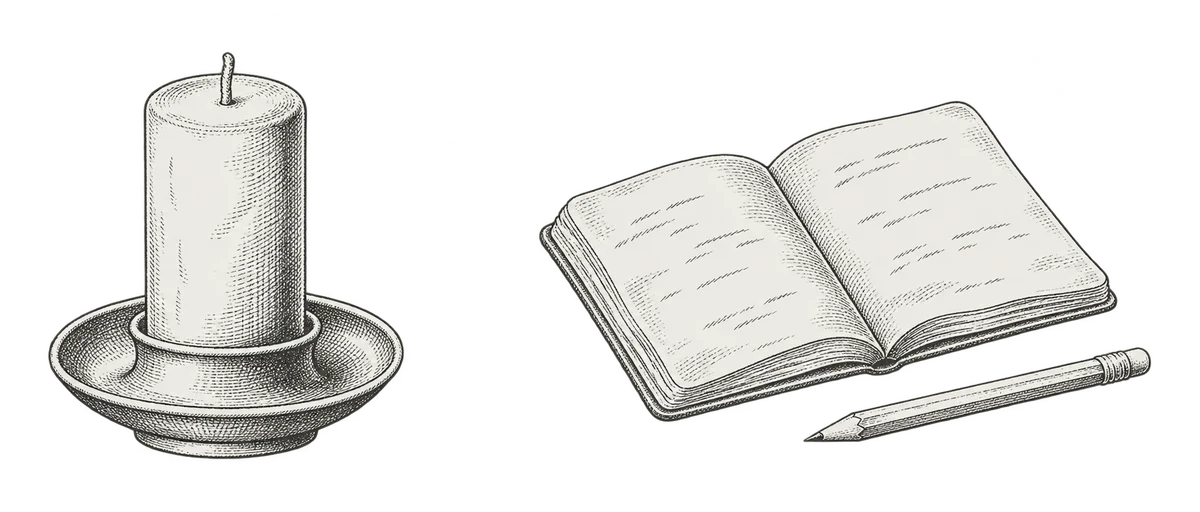
Gather a candle in its holder, a suitable surface, and a notebook and pencil. Allow about ten minutes. You can follow the same sequence with an LED candle when an open flame is unsuitable.
- Write one intention and one action you can take today. For example: “I will speak clearly” and “I will write down the point I need to raise.”
- Set the notebook away from the candle. Check the space and light the candle, or switch on the LED light.
- Read the intention once. Sit comfortably for a short pause and bring your attention back to the written action when it wanders.
- Extinguish the flame fully or switch off the light. You do not need to let a candle burn down to finish the ritual.
- Complete the action and note what happened. Save the remaining candle for another supervised session if its instructions allow reuse.
Red: keep a commitment
In this contemporary example, red is a personal reminder of commitment. It does not make another person act, increase attraction or guarantee an outcome. Use a red candle you already own, a plain candle or an LED light; the action gives the exercise its purpose.
Gather the candle in its proper holder, a notebook and pencil. Plan the arrangement while the candle is unlit. Put the notebook separately, well outside the burning area. Allow ten quiet minutes and remain with any lit candle.
- Write one commitment: “I will start the task I have been postponing.” Add the first ordinary step, such as opening a draft and writing its first sentence.
- Light the candle only after checking the space and product instructions, or switch on the LED light. Say, “I give this task a beginning I can keep.”
- Pause briefly with the intention, then extinguish the candle fully or switch off the light. Do the written step after the flame is out.
- Record what you did and choose a realistic next time. A flicker is not a verdict on whether the commitment will succeed.
White: a fresh page
Here white stands for an uncluttered beginning because that is the association chosen for this exercise. It is not a universal rule about purification. Choose a white or plain candle, an LED light, or an unlit candle as the focus.
Use a clear, ordinary surface and keep the notebook outside the burning area. The exercise is complete when you make the space and take your next step; no smoke, oils or added plant material is required.
- Write the name of one small space to reset: a desk corner, a notebook page or tomorrow’s task list. Keep the scope small enough to finish.
- Use the candle or LED light for a short supervised pause. Say, “I make room for what I choose next.”
- Extinguish the flame or switch off the light before sorting paper or moving objects. Clear the chosen space and put each item in its ordinary place.
- Write what is now easier to do. Keep or reuse the candle according to its instructions; it does not need to burn down.
Yellow: one question
Yellow is an optional marker for attention in this Okkult exercise. The practice does not improve a test result by itself or replace preparation. Use a plain candle or LED light if that is what you have.
Choose one question you can investigate using a book, your notes or a conversation. Set your reading materials away from any candle before beginning.
- Write a question such as “Which part of this chapter do I not understand?” Add one way to investigate it.
- Take a brief supervised pause with the candle or LED light. Say, “I choose one question and one useful next step.”
- Extinguish the candle fully or switch off the LED light. Read, write or ask the question for a short period you have chosen.
- Record one thing learned and one uncertainty that remains. A useful question can stay open; the flame is not an answer key.
Read wax with a clear record
If you want to explore the shapes left after a candle session, begin with a cooled object and a plain description. The wax guide separates a documented divination term from our own shape prompts and a worked notebook example.
Flame observation and interpretation
If you use candle observation for divination, write a plain description before assigning meaning: leaning, flickering, or steady. Airflow and the condition of the wick can affect a flame; its movement is not evidence of a message or an approaching event.
Use an association to open a question in your notebook, then compare it with known facts. If the candle behaves unusually, end the session and check the product instructions.
Candle magic without a flame
Use an LED candle, an unlit candle, or a drawn candle as a focus. Mark the start by switching on the light or placing the drawing on the table; mark the end by switching it off or closing the notebook.
The action you chose still completes the practice. A flame-free version can fit shared spaces and situations where burning is not permitted.
Related workings from the archive
- The candle-flame omen
Explore flame observation as a reflective divination exercise.
- The morning candle ward
Use a short, supervised candle practice to focus on a boundary.
- The blue candle abundance
Pair a candle working with a measurable resource goal.
Common questions
Do I need a different candle color for every spell?
No. Choose a plain candle or a flame-free object and explain its meaning in your notes. Add color only if it helps you remember the purpose.
Must a spell candle burn all the way down?
No. This guide uses a short supervised session. Extinguish the candle when the practice ends and follow the maker’s instructions for later use.
Can I combine candle magic with protection or prosperity work?
Yes. Candle practice describes a method, while protection and prosperity describe intentions. Choose one purpose and follow the complete instructions for the working you select.
Continue exploring
- On intention, attention, and the art of beginning.
- Knot magic for beginners: cord spells, seven knots and source notes
- Protection symbols and charms: personal sigils, rowan and written signs
- Water scrying for beginners: setup, questions and a reading record
- Spell jars for beginners: materials, intentions and a dry jar ritual
- Candle wax meanings: shapes, ceromancy and a reflection record
- New and full moon ritual calendar: November 2026–April 2027
- Yule traditions and winter-solstice spells
- Yule spells: ten book-informed winter workings
- Poppet magic for beginners: making and using a ritual figure
- Glamour magic for beginners: spells for confidence and presence
- How to make a sigil: a beginner’s guide to sigil magic
- Sigil meanings: reading and creating personal symbols
- How to charge a sigil: three simple rituals
- Ritual cleanup: how to dispose of spell remains
- Moon rituals for intention and reflection
- Folk magic: household symbols and contemporary practice
- Witchcraft for beginners