Poppet magic.
Make a simple figure from paper or cloth and give it one intention. Use the outline reference, follow a complete practice and record when the figure returns to its materials.
What is a poppet in magic?
Here, a poppet is a human-shaped figure used as a symbolic stand-in during a ritual. It can be a drawing on a sheet, a paper cutout, or a simple cloth figure. Features and artistic skill are optional; the role you assign to the figure gives it a place in the working.
The poppet spells in this guide are original contemporary exercises written for Okkult. They do not claim a particular historical lineage or demonstrate that handling a figure can change a person at a distance. Each uses a figure of yourself and a purpose you choose.
Choose paper or cloth
Paper is a straightforward first material: you can draw, label, fold, and recycle it. Cloth allows a different sequence: gather, tie, wrap, then undo the ties. Choose the material that fits the gesture you want the ritual to contain.
Use clean materials that you can store and take apart. These exercises need no hair, blood, photographs, herbs, pins, or purchased doll. A written name or private mark is enough to identify the figure.
| Material | How to form it | How to close the working |
|---|---|---|
| Paper | Draw a figure; cutting it out is optional. | Remove its assigned role, then archive or recycle it. |
| Cloth | Gather scraps into a head and tie a loose waist. | Unwrap it, undo the ties, and reuse the fabric. |
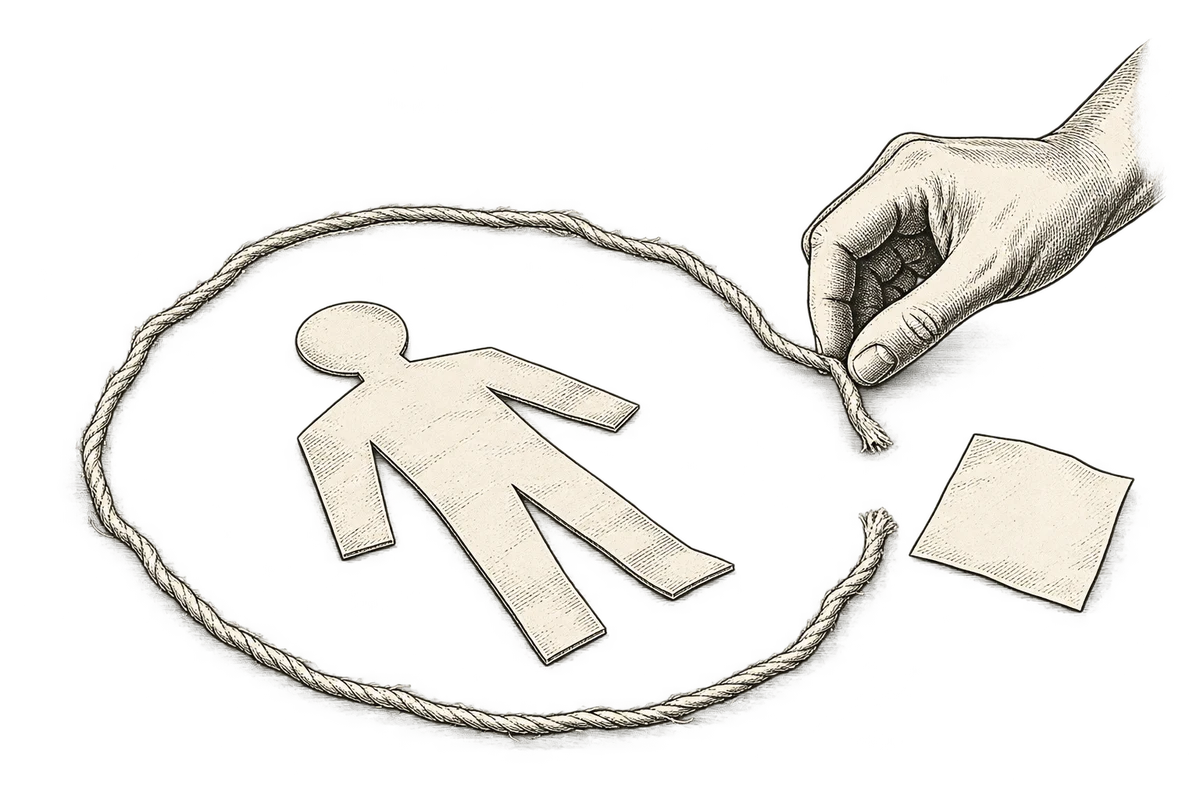
| Paper with a cord boundary | Lay an open circle around the figure. | Lift the cord away and store the materials separately. |
A paper-poppet outline
Use this simple shape as a reference for your own drawing. A broad body leaves room for one word; features and an exact likeness are unnecessary. The front and back examples show where the intention and identifying mark go.
A plain paper outline
Copy a simple head, body, arms and legs onto your own sheet. Leave room for a word on the chest. You can keep the drawing on the sheet; cutting it out is optional.
Front: one chosen quality
This example places “Courage” on the chest. Use a quality that fits your own occasion. Keep the action and its date on a separate note beside the figure, or in the same envelope.
Back: a private mark
Write your name, initials or a private identifying mark on the reverse. “My mark” labels the place in this schematic; replace it with your own choice. No likeness or personal material is required.
These are simple drawing references for the contemporary paper practice. The complete ritual includes the occasion, action and closing.
Follow the complete paper-poppet ritualHow to make a paper poppet
Gather paper and a pencil. Scissors are optional. Allow about ten minutes, and decide where you will keep the figure before beginning.
- Draw a figure with a head, body, arms, and legs. Leave it on the sheet or cut around its outline.
- Write your name or a private identifying mark on the back. Keep identifying details out of view if the figure will be stored in a shared space.
- Write one intention on the front, such as “I begin with courage.” On a separate note, record the occasion and a review date.
- Hold the paper and say, “This figure stands for me in this working.” Read the intention once.
- Choose the complete ritual below that fits your purpose. When the session ends, place the figure in a dry, private envelope until its review date.
Make a no-sew cloth poppet
Gather a clean handkerchief-sized square, a small bundle of clean fabric scraps, and two short lengths of cotton thread. Set aside another cloth if you want to wrap the completed figure.
- Place the scraps at the center of the square. Gather the cloth around the scraps and tie loosely below the bundle to form a head.
- Spread two opposite corners out as arms. Gather the remaining corners downward and tie a loose waist below the arms.
- Place the figure beside a paper label carrying your name or mark. Say, “This figure stands for me in this working,” then state your intention.
- Keep the label with the figure in a dry storage place. When you retire it, undo the neck and waist ties and separate the fabric for reuse.
Naming and dedicating the poppet
Naming states what the figure represents within the ritual. Use your name, initials, or a private mark and say the relationship plainly: “This figure stands for me.” Then state one purpose and how long the working will last.
Keep the naming separate from the desired outcome. “This figure stands for me as I prepare to speak” identifies both subject and occasion. Add the action you will take in your notebook, such as writing an opening sentence. You can speak the dedication aloud or silently.
Choose a poppet spell for your intention
The paper courage working places a word at the figure’s chest, folds it inward, and carries it through one undertaking. Its final unfolding marks the end of that occasion.
The cloth rest working uses wrapping and unwrapping to mark a pause in activity. The boundary working lays a cord around a figure, with an opening for the access you choose. Read a complete entry below before preparing its materials.
One occasion, one complete record
This fictional example follows the paper courage ritual. It shows a plan and later follow-up, not an observation from an Okkult editor. The separate note carries the practical details so the figure needs only its identifying mark and chosen word.
| Field | Example |
|---|---|
| Figure and purpose | A paper self-figure, a private mark on the back and Courage on the chest. Original contemporary Okkult exercise. |
| Occasion and action | Ask one question at tomorrow’s class. Prepare its first sentence tonight. |
| Storage and review | Keep figure and note together in an envelope. Review after the class. |
| What happened, added later | Prepared the sentence and asked the question. Still felt nervous; the note does not establish what caused the action. |
| Closing and next choice | Read the closing line, removed the assigned role and kept the dated paper record. Next class: prepare another question without making a new figure. |
Store the poppet between sessions
Keep paper in an envelope and cloth in a clean, dry pouch or box. Label the storage with a purpose or review date rather than private details if other people may see it. Keep cords and small figures away from children and pets.
At the review, note which gestures you performed, what you actually did afterward, and whether you want to continue. Revisit the written intention before repeating the sequence. An uneventful session does not call for a stronger material or a more elaborate figure.
How to retire a poppet
Open the envelope or unwrap the figure. Read its intention once, then say, “This figure returns to its materials; the working is complete.” Remove the label, erase the identifying mark if practical, and date the end of the working in your notebook.
Recycle suitable paper or keep it as a dated record. Undo cloth ties and reuse clean fabric and thread. If anything has become soiled, handle it according to the material and local waste guidance. Burning, burial, and leaving the figure outdoors are unnecessary for these exercises.
Related workings from the archive
- A paper poppet spell for courage
A paper figure, a word at the chest, and a carried intention for one undertaking.
- A cloth poppet ritual for rest
Make a no-sew figure and wrap it to mark the close of a busy day.
- A poppet boundary spell with an open cord
Place a cord around a figure of yourself to define an opening and a limit.
Common questions
Can I leave the outline on its sheet?
Yes. Cutting is optional. Label the front and reverse of the sheet, and keep the action and review date on a separate note. The drawing can represent you without becoming a cutout.
Does a poppet have to look like the person it represents?
No. A simple outline is enough for these exercises. A name or private mark states the role you have assigned to it.
Do I need to sew a poppet?
No. Use a paper drawing or the no-sew cloth method above. The cloth figure uses two loose ties that you can undo at the end.
Do I need hair or other personal materials?
No. The workings here use a written name or private mark. No bodily materials are needed.
Is poppet magic the same as a “voodoo doll”?
This guide uses “poppet” for the figures in its own contemporary exercises. It does not describe them as Vodou practices or treat distinct religious traditions as interchangeable. A doll’s appearance alone does not establish its origin or ritual purpose.
Can I use the same poppet for another spell?
Yes. Close the earlier working, remove its label or intention, and dedicate the figure again. Use a fresh sheet if removing the old marks would make a paper figure confusing.
What happens if the poppet tears or comes apart?
You can repair or replace it, or close the working and recycle or reuse its materials. Damage to the figure is not evidence that something has happened to the person it represents.
Continue exploring
- The extraordinary life of ordinary things.
- On intention, attention, and the art of beginning.
- Knot magic for beginners: cord spells, seven knots and source notes
- Protection symbols and charms: personal sigils, rowan and written signs
- Water scrying for beginners: setup, questions and a reading record
- Spell jars for beginners: materials, intentions and a dry jar ritual
- Candle wax meanings: shapes, ceromancy and a reflection record
- New and full moon ritual calendar: November 2026–April 2027
- Yule traditions and winter-solstice spells
- Yule spells: ten book-informed winter workings
- Glamour magic for beginners: spells for confidence and presence
- How to make a sigil: a beginner’s guide to sigil magic
- Sigil meanings: reading and creating personal symbols
- How to charge a sigil: three simple rituals
- Ritual cleanup: how to dispose of spell remains
- Candle magic for beginners
- Moon rituals for intention and reflection
- Folk magic: household symbols and contemporary practice
- Witchcraft for beginners