Cupid’s nosegay
Look closely at the flowers, binding, and ritual preparation in a printed love-dream recipe.
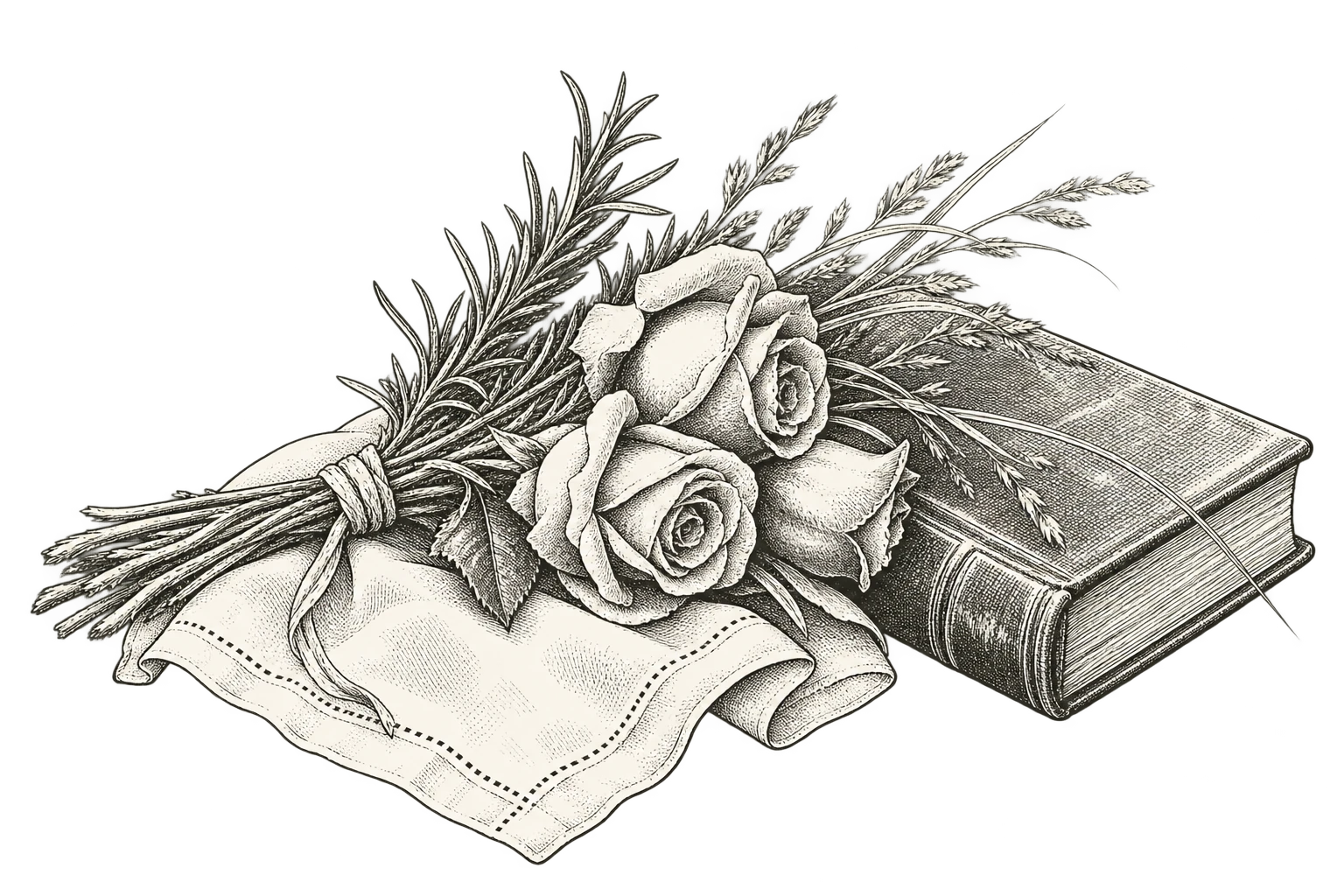
A nosegay sounds like a small, friendly object. That makes the title of this recipe a poor guide to what follows. Noe’s account joins coloured flowers, rue, rosemary, grass, hair, and an act of animal killing before the bouquet reaches the sleeper.
The full preparation matters when deciding how to describe the source. Keeping the flowers and quietly deleting the rest would not produce an unchanged historical charm.
More than a list of plants
The bouquet brings several colours and kinds of material into one object. It is bound with a bodily link and placed near the dreamer. The book then assigns consequences to dream images involving danger and difficult journeys.
Those interpretations should remain part of the printed account. A storm in a present-day dream does not establish that the handbook’s forecast applies to the dreamer. A plant list also does not establish a secure origin or a tradition shared by everyone who uses those plants.
What an adaptation owes the reader
A contemporary flower petition could be made with an ordinary ribbon and no animal material. Its creator would need to say which actions and words are new, rather than describing the changed bouquet as this recipe recovered.
We keep the nosegay here as historical material instead of supplying a softened practical version under the same promise. Readers wanting a finished flower working can use the sealed rose dream, where the changed packet and preparation are stated openly.
Source and reading notes
Animal harm is part of the recorded recipe and is not reproduced as an instruction. This article discusses the construction and interpretation of the printed charm.
A. H. Noe, The Witches’ Dream Book; and Fortune Teller (1885). “Cupid’s nosegay,” p. 86.